Rainwater management is one of the most important parts of protecting a home. When rain falls on a roof, the roofing system needs to move that water away from the structure efficiently and consistently. Poor drainage can contribute to overflowing gutters, standing water, soil erosion, foundation concerns, water intrusion, and damage to landscaping.
For homeowners in Baton Rouge, Louisiana, effective rainwater management deserves particular attention. Baton Rouge receives substantial rainfall throughout the year. According to National Weather Service 1991–2020 climate normals, Baton Rouge Ryan Field averages approximately 61.94 inches of precipitation annually, with several months receiving around five or more inches of average rainfall.
A properly designed and maintained metal roofing system can play an important role in directing rainwater away from the home. Its smooth surface, panel configuration, roof slope, flashing, valleys, gutters, and downspouts can all work together to create an effective water-shedding system.
Understanding metal roof water drainage can help homeowners make better decisions about roof design, installation, maintenance, and repairs.
Why Rainwater Management Matters for Homeowners
Every roof receives water whenever it rains. The important question is what happens to that water after it reaches the roofing surface.
A well-designed system should:
- Shed water efficiently
- Direct water toward appropriate drainage areas
- Prevent unnecessary pooling
- Move water into gutters or other drainage systems
- Keep water away from vulnerable building components
- Reduce uncontrolled runoff around the foundation
- Protect exterior walls and landscaping
When these functions are not working correctly, water can accumulate or travel into areas where it does not belong.
This is why metal roof water drainage is more than a roofing term. It represents an important part of the home’s overall water-management strategy.
How Metal Roofing Helps Move Rainwater
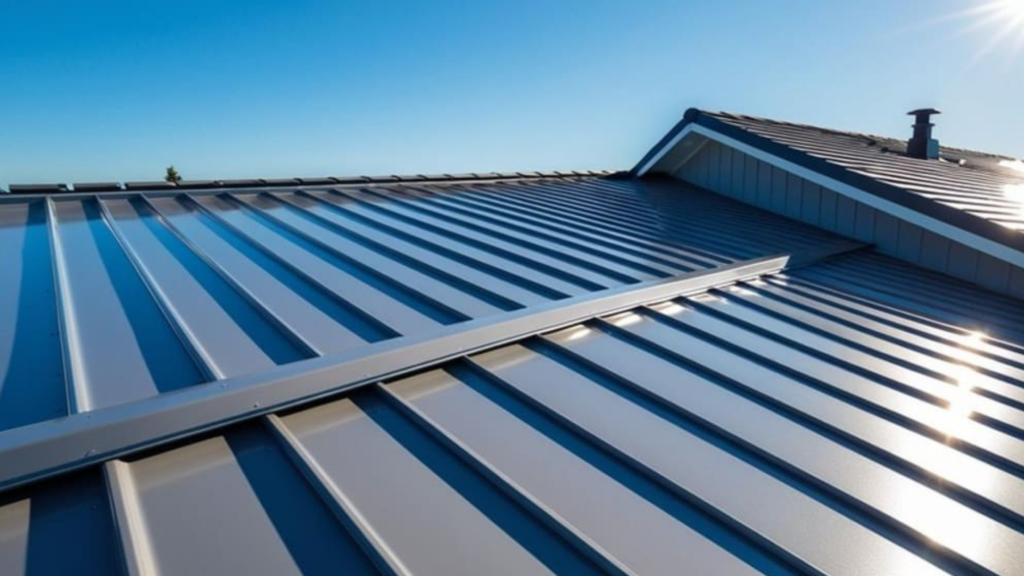
Metal roofing is typically installed as panels with relatively smooth surfaces. When the roof has an appropriate slope, rainwater can flow across the panels toward the lower edges of the roofing system.
Unlike a roof that allows water to remain trapped in uneven areas, a properly installed metal roof is designed to shed water continuously.
The exact drainage performance depends on several factors, including:
- Roof pitch
- Panel design
- Seam configuration
- Flashing
- Valleys
- Roof penetrations
- Gutters
- Downspouts
- Roof layout
- Installation quality
These components must work together.
A high-quality metal roofing material cannot compensate for poor roof design or improperly installed drainage components.
The Importance of Roof Pitch
Roof pitch is one of the most important factors affecting metal roof water drainage.
The slope provides the force that allows water to move toward the lower portions of the roof.
A steeper roof generally encourages faster water movement, while a low-slope roof may require more careful detailing to manage water.
Metal roofing systems can be designed for different slopes, but the appropriate panel system must match the roof design and manufacturer’s requirements.
Homeowners should never assume that every metal roofing product can be installed on every roof pitch.
The relationship between the roofing material and roof slope should be considered during design and installation.
Metal Roof Panels and Water Shedding
Metal panels are designed to create a continuous exterior surface that sheds water.
Depending on the roofing system, panels may be connected using exposed fasteners, concealed fasteners, interlocking seams, or other configurations.
The condition of these panels can directly affect water management.
Problems such as:
- Dents
- Bent panels
- Open seams
- Corrosion
- Improperly installed fasteners
- Damaged edges
- Failed sealants
can interfere with proper water shedding.
Maintaining the panels is therefore an important part of maintaining metal roof water drainage.
How Seams Affect Water Management
Seams are critical areas of many metal roofing systems.
The purpose of a seam is to connect roofing panels while helping maintain the integrity of the roof surface.
If seams become damaged, separated, improperly sealed, or incorrectly installed, water may be able to enter areas where it should not.
Some metal roofing systems use standing seams that are mechanically joined or otherwise designed to reduce exposed fastening points.
Other systems use different panel connections.
Regardless of the design, seams should be inspected periodically to ensure that they remain in good condition.
Flashing Plays an Important Role
Flashing is another essential component of metal roof water drainage.
Roofing panels may shed most of the rainwater, but water still needs to travel around areas where the roof intersects with other building components.
Flashing may be used around:
- Chimneys
- Skylights
- Vents
- Pipes
- Walls
- Valleys
- Roof edges
- Dormers
- Other transitions
These areas can become vulnerable when flashing is damaged or improperly installed.
Proper flashing helps direct water away from vulnerable openings and transitions.
Why Roof Valleys Need Special Attention
Roof valleys are areas where two roof sections meet.
They can receive significant amounts of water because runoff from multiple roof planes may converge in one location.
A properly designed valley directs water toward an appropriate drainage path.
Poorly designed or damaged valleys can contribute to:
- Water backup
- Leaks
- Debris accumulation
- Corrosion
- Overflow
- Damage to surrounding roofing materials
Because valleys concentrate water, they deserve careful attention when evaluating metal roof water drainage.
Metal Roofing and Gutters Work Together
A metal roof does not operate independently from the home’s gutter system.
Rainwater that reaches the lower edge of the roof typically needs a controlled path away from the structure.
Gutters collect runoff and direct it toward downspouts.
If gutters are clogged, damaged, improperly sized, or poorly positioned, even a well-installed metal roof may not provide effective overall water management.
Homeowners should therefore think about the roof and gutter system as connected components.
The objective is not simply to get water off the roof. It is to control where that water goes after leaving the roof.
The Role of Downspouts
Downspouts are responsible for carrying collected water from gutters toward an appropriate discharge location.
A downspout that is too small, clogged, damaged, or poorly positioned may cause water to overflow from the gutter.
This can result in water falling close to the foundation or washing away soil around the home.
Effective metal roof water drainage should therefore include a properly functioning downspout system.
Downspouts should also discharge water far enough from the home where appropriate and according to the property’s drainage design.
Why Baton Rouge Homes Need Effective Rainwater Management
Baton Rouge receives significant annual precipitation. The National Weather Service’s 1991–2020 climate normals list approximately 61.94 inches of annual precipitation for Baton Rouge Ryan Field.
That amount of rainfall means homeowners need to consider how water moves across the roof and away from the property.
Heavy rainfall can place additional demands on:
- Roof panels
- Valleys
- Gutters
- Downspouts
- Flashing
- Drainage paths
- Soil around the foundation
A metal roofing system can provide an efficient water-shedding surface, but the entire drainage system needs to be properly designed and maintained.
Preventing Water From Reaching the Foundation
One of the most important goals of metal roof water drainage is directing water away from the foundation.
When roof runoff falls directly beside the home, it can saturate surrounding soil.
Repeated water exposure around the foundation may contribute to erosion and other drainage problems.
A functioning gutter and downspout system can collect roof runoff and move it toward a more appropriate discharge area.
Homeowners should periodically inspect the areas around downspout outlets for signs of erosion, standing water, or soil displacement.
How Poor Drainage Can Affect Exterior Walls
Rainwater can also affect exterior walls when drainage systems are not functioning properly.
Overflowing gutters can send water over the sides of the gutter and down exterior walls.
Over time, uncontrolled water can contribute to:
- Staining
- Deterioration
- Moisture intrusion
- Damage to siding
- Damage around windows
- Paint deterioration
Effective metal roof water drainage helps reduce uncontrolled water movement along the exterior of the home.
Metal Roof Water Drainage and Landscaping
Rainwater management also affects landscaping.
Uncontrolled runoff can wash soil away from garden beds, expose plant roots, create muddy areas, and damage landscaping features.
Homeowners can help reduce these problems by making sure roof runoff has a controlled path.
This may involve properly positioned downspouts, extensions, drainage channels, or other site-specific solutions.
A roofing contractor can evaluate the roof’s water-shedding components, while drainage professionals may be appropriate when broader property grading or stormwater issues are involved.
Avoiding Standing Water
Standing water is generally a concern for roofing systems because prolonged moisture exposure can increase the risk of deterioration.
Metal roofs are designed primarily to shed water rather than retain it.
If water repeatedly collects in one location, the underlying cause should be investigated.
Possible causes may include:
- Inadequate slope
- Structural movement
- Debris
- Improper installation
- Damaged panels
- Drainage obstructions
- Poorly designed transitions
A professional evaluation can determine whether the issue is related to the roofing system or the property’s broader drainage design.
How Debris Can Affect Drainage
Leaves, branches, dirt, and other debris can interfere with metal roof water drainage.
Debris can accumulate in valleys, around roof penetrations, near gutters, or along drainage paths.
When debris blocks water movement, rainwater may back up or flow in unintended directions.
This is particularly important for homes surrounded by mature trees.
Regular roof and gutter maintenance can help prevent debris from becoming a drainage obstruction.
The Importance of Gutter Maintenance
Gutters are an important part of the overall roofing system.
Homeowners should inspect gutters periodically for:
- Leaves
- Twigs
- Sediment
- Rust
- Holes
- Loose sections
- Sagging
- Detached components
- Improper slope
A gutter system that is full of debris cannot effectively collect roof runoff.
Maintaining the gutters therefore supports the larger goal of metal roof water drainage.
Gutter Guards Can Support Maintenance
Some homeowners use gutter guards to reduce the amount of debris entering their gutters.
Gutter guards can potentially reduce maintenance demands, but they do not make gutters maintenance-free.
Debris can still accumulate on top of or around the guard system.
Homeowners should continue checking their gutters and drainage system even when guards are installed.
Roof Penetrations and Rainwater
Every roof penetration creates an area that requires careful detailing.
Examples include:
- Plumbing vents
- Exhaust vents
- HVAC-related penetrations
- Skylights
- Chimneys
- Solar equipment
Water needs to move around these components without entering the building.
Proper flashing and compatible sealants help protect these locations.
When evaluating metal roof water drainage, professionals should pay close attention to penetrations because water can exploit even relatively small installation defects.
How Proper Installation Supports Drainage
The installation process plays a major role in the long-term performance of a metal roofing system.
Installers need to understand:
- Panel layout
- Roof pitch
- Fastener placement
- Seam construction
- Flashing
- Valley details
- Edge details
- Penetrations
- Gutter integration
A roofing system may contain excellent materials but still experience problems if installation details are incorrect.
Professional installation is therefore an important investment in long-term metal roof water drainage.
Why Fasteners Matter
Fasteners are particularly important on metal roofing systems that use exposed fastening.
A fastener that is loose, improperly installed, corroded, or damaged may create an opportunity for water intrusion.
Fastener placement also needs to follow the requirements of the specific roofing system.
Homeowners should avoid attempting to tighten or replace roofing fasteners without appropriate knowledge, since improper work can damage panels or compromise the roofing system.
Sealants and Water Management
Sealants may be used around seams, penetrations, flashing, and other roofing components.
Over time, exposure to sunlight, heat, moisture, and movement can cause sealants to deteriorate.
Cracked, separated, or failing sealants should be evaluated.
Replacing deteriorated sealant when appropriate can help maintain the roof’s water-shedding and waterproofing details.
However, sealants should not be treated as a permanent substitute for properly designed roofing components.
Metal Roofing and Heavy Rain
Heavy rainfall puts a roofing system’s drainage capacity to the test.
During intense rainfall, water can move rapidly across roof surfaces and into gutters.
If gutters and downspouts cannot handle the runoff, water may overflow.
This is why metal roof water drainage should be considered during roof and gutter design rather than only after a drainage problem develops.
Homeowners may need to consider roof area, roof pitch, gutter capacity, downspout placement, and property drainage together.
Roof Design and Water Flow
The shape of a roof affects how water moves.
A complex roof may have multiple slopes, valleys, dormers, and transitions.
Each additional roof intersection creates another area where water flow needs to be carefully managed.
A professional roofing contractor can evaluate how the various roof sections work together.
For homeowners planning an addition or major renovation, considering metal roof water drainage during the design stage can help prevent future water-management problems.
Metal Roofs and Stormwater Management
A roofing system is one component of the property’s overall stormwater management.
The roof collects precipitation, gutters concentrate runoff, downspouts transport it, and the surrounding property needs to receive or redirect that water appropriately.
During significant storms, the volume of runoff can increase substantially.
Baton Rouge’s substantial annual precipitation makes this an important consideration for homeowners.
A well-maintained roofing and drainage system can help control where water goes and reduce unnecessary exposure to vulnerable areas of the property.
Signs Your Roof Drainage System Needs Attention
Homeowners should watch for signs that metal roof water drainage may not be functioning properly.
Warning signs include:
- Water overflowing from gutters
- Water stains near roof edges
- Soil erosion beneath downspouts
- Standing water near the foundation
- Persistent wet areas
- Damaged landscaping
- Rust around drainage components
- Water entering the attic
- Sagging gutters
- Detached downspouts
- Debris-filled valleys
These signs do not always indicate a roofing problem alone. They may point to an issue with the gutter system, property grading, or another part of the drainage network.
What Homeowners Can Do to Improve Drainage
Homeowners can take several practical steps to support better rainwater management.
Keep Gutters Clear
Clean gutters allow roof runoff to move toward downspouts.
Inspect Downspouts
Make sure downspouts are securely attached and able to carry water away from the home.
Watch for Erosion
Inspect areas beneath downspouts for signs of soil displacement.
Keep Valleys Clear
Remove debris when appropriate and have damaged areas professionally evaluated.
Schedule Roof Inspections
Professional inspections can identify drainage-related roofing problems before they become more serious.
Address Problems Promptly
Small issues can become more expensive when water repeatedly enters vulnerable areas.
Professional Roof Inspections and Water Drainage
A professional roof inspection can evaluate more than just visible leaks.
A roofing professional can look at:
- Roof pitch
- Panel condition
- Seams
- Valleys
- Flashing
- Fasteners
- Penetrations
- Roof edges
- Gutters
- Drainage-related damage
This comprehensive approach helps identify problems affecting metal roof water drainage.
Regular inspections can be especially helpful after major storms or when homeowners notice changes in how rainwater moves around the property.
How Metal Roof Maintenance Supports Water Management
Maintenance helps preserve the components responsible for water shedding.
Maintenance may include:
- Cleaning debris
- Checking seams
- Inspecting fasteners
- Monitoring corrosion
- Maintaining flashing
- Inspecting gutters
- Checking downspouts
- Addressing damaged panels
- Monitoring sealants
A proactive maintenance strategy can help keep metal roof water drainage functioning as intended.
When Repairs Are Necessary
If a homeowner notices a drainage problem, the solution depends on its cause.
For example, a clogged gutter may only require cleaning.
A damaged panel may require repair or replacement.
A failed flashing detail may need professional repair.
A structural issue may require more extensive evaluation.
The key is identifying the actual source of the problem instead of treating only the visible symptom.
Why Local Roofing Expertise Matters
Baton Rouge homeowners face a climate with significant rainfall and hot temperatures. The National Weather Service’s long-term normals show approximately 61.94 inches of annual precipitation at Baton Rouge Ryan Field.
This makes effective rainwater management an important consideration when selecting and maintaining a roofing system.
Local roofing professionals understand the environmental conditions that can affect roofing materials and drainage components.
At Stalwart Roofing, we evaluate roofing systems with the local climate in mind and help homeowners understand how roof design, maintenance, and drainage work together.
Why Choose Stalwart Roofing?
Stalwart Roofing serves homeowners in Baton Rouge, Louisiana, with a focus on dependable roofing solutions and professional workmanship.
When homeowners are concerned about metal roof water drainage, our goal is to identify the cause of the concern and provide practical recommendations based on the condition of the roofing system.
We understand that effective drainage involves more than the metal panels themselves.
Roof pitch, flashing, seams, gutters, downspouts, penetrations, and surrounding property conditions can all influence how rainwater moves.
A professional evaluation can help homeowners determine whether they need routine maintenance, targeted repairs, or more extensive roofing work.
Protecting Your Home From Uncontrolled Rainwater
Water is one of the most persistent forces affecting a home.
Even small drainage problems can become significant when they occur repeatedly over months or years.
By maintaining the roof, gutters, downspouts, and other drainage components, homeowners can help direct water away from vulnerable parts of the property.
A properly designed metal roofing system provides an effective surface for shedding rainfall, but it must be supported by appropriate installation and maintenance.
Understanding metal roof water drainage gives homeowners a better perspective on how the roofing system contributes to the protection of the entire property.
Final Thoughts on Metal Roof Water Drainage
A metal roof can do much more than provide a durable protective covering over a home. When properly designed and installed, it can help move rainwater efficiently toward gutters and other drainage components.
For Baton Rouge homeowners, this function is especially important because the area receives substantial rainfall throughout the year. Long-term National Weather Service climate normals show approximately 61.94 inches of annual precipitation at Baton Rouge Ryan Field.
Effective metal roof water drainage depends on many interconnected components, including roof pitch, panels, seams, valleys, flashing, fasteners, gutters, downspouts, and the surrounding property’s drainage design.
Homeowners should watch for overflowing gutters, standing water, erosion, damaged flashing, clogged valleys, leaks, and other signs that water is not moving as intended.
Regular maintenance and professional inspections can help identify these problems early.