Louisiana is known for its long, hot summers, high humidity, and intense sunlight. While these conditions can be challenging for people, they can be even more demanding on roofing systems. Commercial flat roofs are particularly vulnerable because they are exposed directly to the sun for extended periods throughout the year. Understanding commercial flat roof heat damage Louisiana property owners face is essential for protecting buildings, extending roof lifespan, and reducing costly repairs.
At Stalwart Roofing in Baton Rouge, Louisiana, we have seen firsthand how extreme temperatures affect commercial roofing systems. Many property owners focus on storm damage and leaks, but heat-related deterioration is one of the most significant threats to flat roofs in Louisiana. Learning about commercial flat roof heat damage Louisiana can help homeowners and commercial property owners take proactive measures to protect their investments.
Understanding Louisiana’s Climate
Louisiana’s weather creates a unique set of challenges for roofing systems.
Factors contributing to commercial flat roof heat damage Louisiana include:
- Prolonged summer temperatures
- High humidity levels
- Strong ultraviolet (UV) radiation
- Frequent temperature fluctuations
- Limited shade on large roof surfaces
These environmental conditions place continuous stress on commercial roofing materials.
Why Flat Roofs Are More Vulnerable to Heat
Unlike steep-slope roofs, flat roofs receive direct sunlight across their entire surface area for much of the day.
When discussing commercial flat roof heat damage Louisiana, flat roofs are particularly susceptible because:
- Heat accumulates more easily
- Large roof surfaces absorb significant solar radiation
- Water evaporation occurs more slowly
- Roofing materials experience prolonged exposure to UV rays
This constant exposure accelerates wear and tear.
The Science Behind Heat Damage
Roofing materials naturally expand when temperatures rise and contract when temperatures cool.
For commercial flat roof heat damage Louisiana, this repeated expansion and contraction can lead to:
- Material fatigue
- Seam separation
- Surface cracking
- Reduced waterproofing effectiveness
Over time, these stresses weaken the entire roofing system.
UV Radiation and Roof Deterioration
Ultraviolet rays are one of the most damaging aspects of Louisiana’s climate.
In commercial flat roof heat damage Louisiana, UV exposure can cause:
- Breakdown of roofing membranes
- Loss of flexibility
- Surface chalking
- Premature aging
Without protection, roofing materials may deteriorate much faster than expected.
Membrane Shrinkage
Many commercial flat roofs use membrane systems such as TPO, EPDM, or PVC.
One common form of commercial flat roof heat damage Louisiana is membrane shrinkage.
Shrinkage can lead to:
- Stress on seams
- Pulling around roof penetrations
- Flashing failures
- Increased leak risks
Routine inspections help identify shrinkage before major problems develop.
Cracking and Splitting of Roofing Materials
Extreme temperatures can make roofing materials brittle over time.
For commercial flat roof heat damage Louisiana, signs of cracking may include:
- Surface fractures
- Splits along seams
- Cracked flashing
- Damaged coatings
Even small cracks can allow water to penetrate the roofing system.
Blistering and Bubbling
Heat can cause trapped moisture or air beneath roofing materials to expand.
In commercial flat roof heat damage Louisiana, blistering often appears as:
- Raised bubbles on the roof surface
- Soft spots beneath roofing membranes
- Areas of separation between layers
Blistering weakens roofing materials and can eventually lead to leaks.
Increased Risk of Roof Leaks
Heat-related damage often compromises the roof’s waterproofing abilities.
For commercial flat roof heat damage Louisiana, leak risks increase because:
- Seams become stressed
- Flashing deteriorates
- Membranes lose flexibility
- Cracks allow moisture entry
Water intrusion can quickly damage insulation and building interiors.
Impact on Roof Coatings
Protective roof coatings help shield roofing systems from sunlight and heat.
However, commercial flat roof heat damage Louisiana can affect coatings by causing:
- Peeling
- Fading
- Cracking
- Reduced reflectivity
Damaged coatings should be repaired or replaced to maintain protection.
Energy Efficiency Challenges
Heat-damaged roofs often contribute to higher energy costs.
In commercial flat roof heat damage Louisiana, reduced energy efficiency may result from:
- Compromised insulation
- Increased heat transfer
- Reduced reflective performance
Buildings with damaged roofs often require more air conditioning to maintain comfort.
HVAC System Strain
Commercial roofs frequently support HVAC equipment.
For commercial flat roof heat damage Louisiana, roof deterioration can impact HVAC systems by:
- Increasing cooling demands
- Reducing equipment efficiency
- Contributing to higher utility bills
Maintaining the roof helps support overall building performance.
Ponding Water and Heat Interaction
Although ponding water is often associated with drainage issues, heat can worsen its effects.
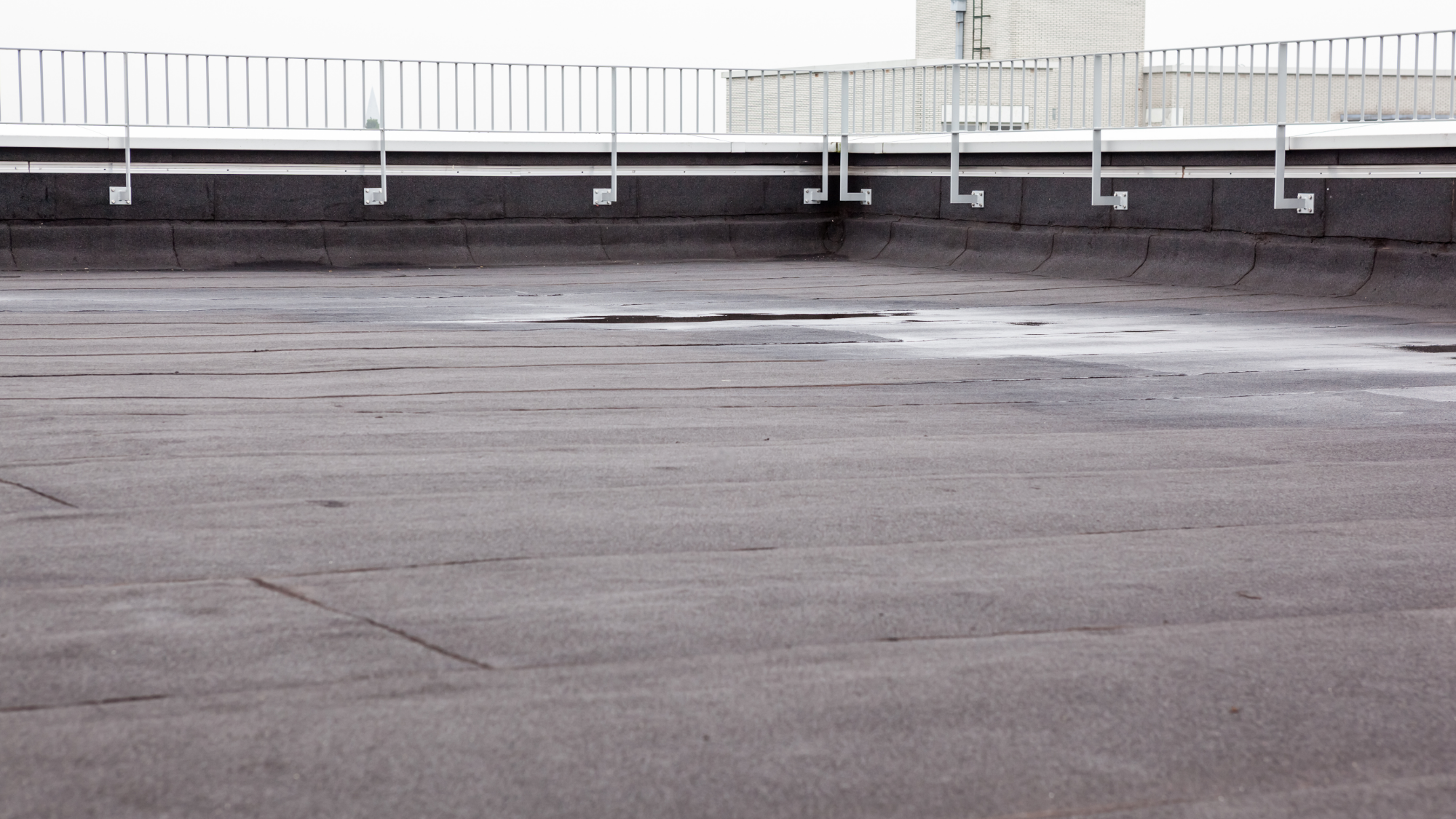
In commercial flat roof heat damage Louisiana, standing water may:
- Accelerate membrane deterioration
- Increase thermal stress
- Promote algae growth
- Contribute to roof surface damage
Proper drainage remains essential year-round.
Effects on Roofing Seams
Roof seams are among the most vulnerable areas of flat roofing systems.
Common commercial flat roof heat damage Louisiana issues include:
- Seam separation
- Adhesive failure
- Thermal movement stress
Once seams begin to fail, water infiltration becomes much more likely.
Flashing Failures
Flashing protects roof edges, penetrations, and transitions.
For commercial flat roof heat damage Louisiana, flashing may experience:
- Expansion and contraction stress
- Sealant deterioration
- Cracking or lifting
Damaged flashing is a common source of roof leaks.
Roof Aging Acceleration
Heat exposure naturally accelerates roof aging.
One major concern with commercial flat roof heat damage Louisiana is that roofing materials may reach the end of their useful life sooner than expected.
Accelerated aging can result in:
- More frequent repairs
- Reduced warranty effectiveness
- Earlier roof replacement needs
Regular maintenance helps slow this process.
Warning Signs of Heat Damage
Property owners should monitor roofs for signs of deterioration.
Common commercial flat roof heat damage Louisiana warning signs include:
- Visible cracking
- Blistering membranes
- Fading roof coatings
- Increased indoor temperatures
- Rising energy bills
- Roof leaks
Early detection can significantly reduce repair costs.
The Importance of Reflective Roofing Systems
Reflective roofing materials can help reduce heat absorption.
For commercial flat roof heat damage Louisiana, reflective systems provide:
- Lower roof surface temperatures
- Reduced cooling costs
- Improved energy efficiency
- Extended roof lifespan
Cool roofing technologies have become increasingly popular in Louisiana.
Preventative Maintenance Strategies
Routine maintenance is essential for reducing heat-related roof damage.
Effective strategies for commercial flat roof heat damage Louisiana prevention include:
- Scheduling regular inspections
- Repairing minor damage promptly
- Cleaning roof surfaces
- Maintaining drainage systems
- Reapplying protective coatings as needed
Preventative maintenance is far less expensive than major repairs.
Professional Roof Inspections
Professional inspections provide valuable insight into roof condition.
For commercial flat roof heat damage Louisiana, inspections help identify:
- Hidden membrane damage
- Seam weaknesses
- Flashing deterioration
- Insulation issues
Annual inspections are highly recommended, particularly before and after summer.
Roof Coating Solutions
Roof coatings offer an effective way to combat heat damage.
In commercial flat roof heat damage Louisiana, modern coatings can:
- Reflect sunlight
- Improve waterproofing
- Extend roof lifespan
- Reduce thermal stress
Coatings are often a cost-effective alternative to premature roof replacement.
When Roof Replacement Becomes Necessary
Despite proper maintenance, every roof eventually reaches the end of its service life.
For commercial flat roof heat damage Louisiana, replacement may be necessary when:
- Repairs become frequent
- Membrane deterioration is widespread
- Energy efficiency declines significantly
- Structural concerns develop
A professional roofing contractor can determine the best course of action.
Why Homeowners and Property Owners Trust Stalwart Roofing
Stalwart Roofing in Baton Rouge, Louisiana, understands the challenges that extreme heat places on commercial roofing systems. Our expertise in identifying and addressing commercial flat roof heat damage Louisiana helps property owners protect their buildings and maximize roof performance.
We provide:
- Comprehensive roof inspections
- Heat damage assessments
- Roof coating applications
- Commercial roof repair services
- Full roof replacement solutions
- Preventative maintenance programs
Our team is committed to helping clients maintain durable and efficient roofing systems despite Louisiana’s demanding climate.
Final Thoughts
Louisiana’s heat can have a significant impact on commercial flat roofs, affecting everything from membrane performance and flashing integrity to energy efficiency and roof lifespan. Understanding commercial flat roof heat damage Louisiana is essential for property owners who want to avoid costly repairs and maximize the value of their roofing investment.
Heat-related issues often develop gradually, making regular inspections and preventative maintenance critical. By addressing warning signs early, maintaining protective coatings, and working with experienced roofing professionals, property owners can significantly reduce the effects of Louisiana’s harsh climate.
At Stalwart Roofing in Baton Rouge, Louisiana, we are dedicated to helping homeowners and property owners protect their roofs from the challenges of extreme heat. With proper care and attention, the risks associated with commercial flat roof heat damage in Louisiana can be minimized, ensuring long-lasting performance and reliable protection for years to come.