A metal roof can be a durable and attractive choice for Louisiana homeowners, but the roofing material is only one part of a complete roofing system. Proper ventilation is another important factor that can affect the health, comfort, and longevity of your home. Without adequate airflow, heat and moisture can accumulate in the attic and roofing assembly, potentially contributing to condensation, mold, wood deterioration, insulation problems, and other concerns.
For homeowners in Baton Rouge, proper metal roof ventilation deserves particular attention. Louisiana’s hot temperatures, high humidity, heavy rainfall, and frequent thunderstorms create an environment where moisture management is especially important. A well-designed ventilation system can help move hot, humid air through the attic while supporting a healthier roofing assembly.
What Is Metal Roof Ventilation?
Metal roof ventilation is the system that allows air to move through the attic or roof assembly.
A properly designed ventilation system generally uses intake and exhaust openings to encourage continuous airflow.
Common components include:
- Soffit vents
- Ridge vents
- Gable vents
- Intake vents
- Roof vents
- Attic fans in certain applications
The exact ventilation strategy depends on the home’s construction, roof design, attic configuration, and local requirements.
Why Ventilation Matters for Metal Roofs
Metal roofing is durable, but the space underneath the roof still needs to be managed properly.
During a hot Baton Rouge afternoon, the temperature inside an enclosed attic can rise significantly. At the same time, humid outdoor air and moisture generated inside the home can create moisture-management challenges.
Proper metal roof ventilation helps move air through appropriate portions of the roofing assembly.
This can help manage:
- Heat
- Humidity
- Condensation
- Moisture accumulation
- Attic air quality
Louisiana’s Humid Climate
Baton Rouge homeowners experience high humidity for much of the year.
Humidity can affect homes in several ways. Warm, moist air can enter the attic through air leaks, while temperature differences can cause moisture to condense on cooler surfaces.
Over time, persistent moisture can affect roofing materials and structural components.
This makes appropriate metal roof ventilation an important consideration for Louisiana homes.
How Condensation Develops
Condensation occurs when warm, moisture-filled air comes into contact with a cooler surface and reaches its dew point.
In an attic, condensation may develop on:
- Metal components
- Fasteners
- Roof decking
- Ductwork
- HVAC components
If condensation happens repeatedly, moisture can accumulate.
Proper airflow can help reduce moisture buildup by allowing humid air to move out of the appropriate attic space.
Metal Roof Ventilation and Moisture Control
Ventilation does not remove every source of moisture, but it can be part of a larger moisture-management strategy.
A properly designed system can help move humid air away from vulnerable areas.
Combined with:
- Air sealing
- Appropriate insulation
- Proper flashing
- Quality underlayment
- Effective drainage
ventilation can contribute to a healthier roof assembly.
The Difference Between Ventilation and Insulation
Homeowners sometimes confuse insulation and ventilation.
They perform different functions.
Insulation slows heat transfer between spaces.
Ventilation provides airflow through designated areas.
Both can be important.
A well-insulated attic can still have moisture problems if ventilation or air sealing is inadequate. Likewise, ventilation alone cannot compensate for severely inadequate insulation.
How Heat Builds Up in an Attic
The roof receives direct sunlight throughout the day.
Metal roofing can become very hot under strong Louisiana sunlight. Some of that heat can affect the air and materials below the roof.
Without appropriate airflow, hot air can remain trapped.
Proper metal roof ventilation helps encourage the movement of hot air through the designated ventilation pathway.
Ridge Ventilation
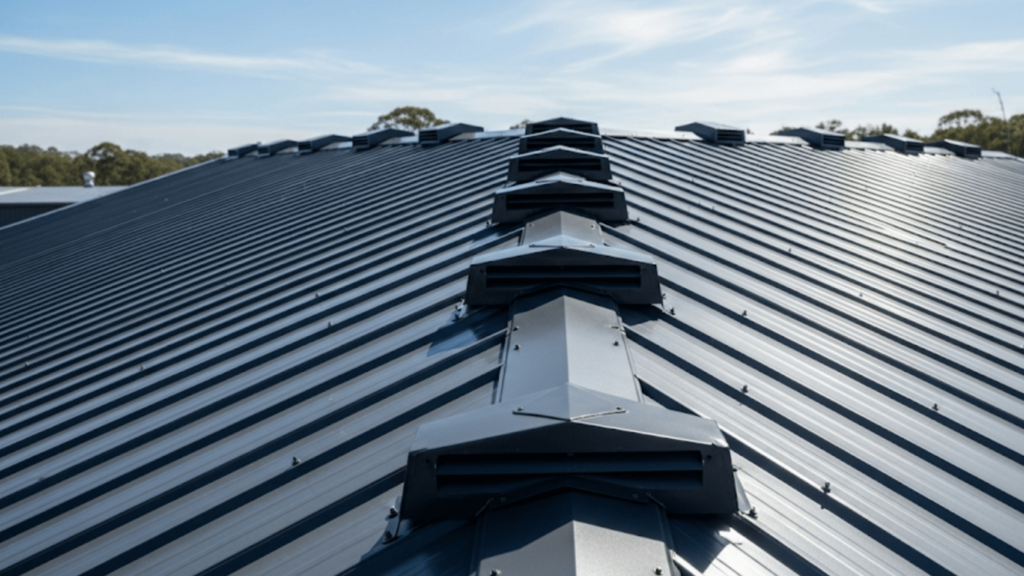
Ridge vents are installed along the highest point of a roof.
Because warm air naturally rises, the ridge can be an effective location for exhaust ventilation when the roof and attic are designed for it.
Ridge ventilation is commonly paired with soffit or other intake ventilation.
Soffit Intake Ventilation
Soffit vents are located beneath the roof overhang.
They can allow outdoor air to enter the attic’s ventilation channel.
For a balanced system, intake ventilation needs to work with exhaust ventilation.
If intake openings are blocked by insulation or other materials, the overall ventilation system may not function as intended.
Gable Ventilation
Some homes use gable vents to provide ventilation through openings in the gable walls.
Gable ventilation may be appropriate for certain roof designs.
However, the best ventilation approach depends on the home’s specific construction.
A roofing professional can evaluate whether existing gable vents are sufficient or whether additional ventilation should be considered.
Roof-Mounted Exhaust Vents
Some roofing systems use dedicated exhaust vents installed through the roof.
These components must be properly integrated with the metal roofing material.
Incorrect installation around a roof vent can create potential leak points.
Proper flashing and sealing are essential.
Balanced Ventilation Is Important
A ventilation system should be designed so that air can enter and exit effectively.
Simply adding more exhaust vents does not necessarily improve airflow.
If there is inadequate intake ventilation, the system may not receive enough air to move through the attic.
A balanced approach is generally more effective.
Why More Vents Are Not Always Better
Homeowners may assume that adding as many vents as possible will solve moisture problems.
However, ventilation design is more complicated.
Too many or poorly positioned vents can interfere with intended airflow patterns.
The goal is not maximum openings. The goal is properly designed airflow.
Metal Roof Ventilation and Air Sealing
Air sealing is an important companion to ventilation.
Warm, humid air from the living space can enter the attic through small openings around:
- Plumbing pipes
- Electrical wiring
- Recessed lights
- Attic access doors
- Ductwork
- HVAC penetrations
If humid indoor air enters the attic continuously, ventilation may have difficulty keeping up.
Sealing these pathways can help reduce moisture entering the attic.
Bathroom Fans and Attic Moisture
Bathroom exhaust fans should normally discharge to the exterior rather than into the attic.
Bathrooms produce significant amounts of warm, humid air.
If that air is vented into the attic, it can contribute to condensation and moisture problems.
Proper ventilation of the bathroom itself is therefore an important part of attic moisture management.
Kitchen Exhaust and Moisture
Cooking also produces moisture.
Kitchen exhaust systems should be appropriately designed and vented according to applicable requirements.
Allowing humid air to accumulate inside the attic can create unnecessary moisture stress.
Metal Roof Ventilation and Insulation
Insulation and ventilation should be planned together.
In a vented attic, insulation is generally installed at the attic floor while ventilation operates within the attic space above it.
If insulation blocks soffit vents, airflow can be restricted.
Proper installation helps preserve the intended ventilation pathway.
Protecting Soffit Vents
Soffit vents can become blocked by:
- Insulation
- Dust
- Debris
- Paint
- Insect nests
Blocked intake vents can reduce airflow.
During inspections, homeowners should have the ventilation system checked to make sure intake pathways remain open.
Metal Roof Ventilation and Mold
Persistent moisture can contribute to mold growth under certain conditions.
Mold may develop on:
- Wood decking
- Roof framing
- Insulation
- Other organic materials
Ventilation can help manage moisture, but visible mold should be evaluated to determine the underlying cause.
Simply adding vents without addressing a roof leak or air leak may not solve the problem.
Signs of Poor Attic Ventilation
Homeowners should watch for signs such as:
- Excessive attic heat
- Condensation
- Damp insulation
- Musty odors
- Mold growth
- Rusted fasteners
- Discolored roof decking
- Peeling paint
- Persistent humidity
These signs may indicate ventilation, insulation, air-sealing, or roofing problems.
A professional inspection can help identify the cause.
Moisture and Roof Decking
The roof deck supports the roofing material.
Persistent moisture can contribute to deterioration of wood decking.
Potential warning signs include:
- Dark staining
- Soft wood
- Warping
- Mold
- Rot
If decking becomes damaged, it may require repair or replacement.
Metal Roof Ventilation and Structural Protection
Moisture-related damage can eventually affect structural components.
Long-term exposure to moisture may contribute to deterioration of:
- Rafters
- Trusses
- Roof decking
- Framing
Proper ventilation is one component of a broader strategy to protect these materials.
Metal Roofing and Thermal Movement
Metal roofing naturally expands and contracts as temperatures change.
Louisiana’s hot climate can make thermal movement particularly noticeable.
Proper roof design and installation allow the roofing material to move appropriately.
Ventilation does not stop thermal expansion, but it can help manage heat within the attic environment.
Metal Roof Ventilation and Energy Efficiency
Ventilation may also influence energy performance.
Removing excessive heat from a properly designed vented attic can reduce heat buildup.
This may help reduce the amount of heat transferred into the living space.
However, ventilation should not be considered a replacement for adequate insulation or efficient HVAC equipment.
Can Ventilation Lower Energy Bills?
Potentially, but results vary.
Energy use depends on:
- Home size
- Insulation
- HVAC efficiency
- Windows
- Air leakage
- Thermostat settings
- Roof design
- Outdoor weather
Proper metal roof ventilation can support an efficient building envelope, but homeowners should be cautious about promises of guaranteed energy savings.
Metal Roof Ventilation During Summer
Summer is one of the most important times to manage attic heat.
Baton Rouge summers can bring prolonged periods of high temperatures.
Proper ventilation can help move hot air out of appropriately designed attic spaces.
This can support better attic conditions and complement insulation.
Metal Roof Ventilation During Storm Season
Severe storms can introduce another set of roofing concerns.
Heavy rain can expose flashing and roof penetrations to significant water flow.
Strong winds can damage vents or roofing components.
After a major storm, homeowners should have their roof inspected if they notice damage or interior signs of moisture.
Ventilation and Roof Penetrations
Every opening through a metal roof must be properly sealed.
Vent pipes, exhaust vents, and other penetrations need appropriate flashing.
A poorly installed vent can become a leak source regardless of how well the attic is ventilated.
Professional installation is therefore important.
Metal Roof Ventilation and Underlayment
Underlayment provides another protective layer beneath the metal roofing panels.
It can help protect the roof deck from water that gets beneath the panels.
However, underlayment and ventilation perform different functions.
Underlayment helps manage water exposure, while ventilation helps manage air and moisture conditions within the appropriate roof assembly.
Common Ventilation Mistakes
Several mistakes can reduce ventilation performance.
These include:
- Blocking soffit vents
- Installing inadequate intake ventilation
- Relying on exhaust vents alone
- Venting bathroom fans into the attic
- Ignoring air leaks
- Installing vents without considering roof design
- Covering ventilation pathways with insulation
- Failing to inspect vents after storms
Avoiding these problems can help maintain better attic conditions.
Installing Insulation Without Blocking Airflow
When adding insulation, homeowners should make sure ventilation channels remain open where required.
Special ventilation baffles may be used in certain roof assemblies to maintain airflow from soffits toward the upper portions of the attic.
The correct installation method depends on the home’s design.
Should You Install an Attic Fan?
Attic fans can be useful in certain circumstances, but they are not automatically the best solution for every home.
A fan may create pressure differences that draw conditioned air from the home into the attic if the building envelope is not properly sealed.
Before adding mechanical ventilation, homeowners should evaluate the existing passive ventilation and air-sealing system.
Passive vs. Mechanical Ventilation
Passive ventilation relies on natural air movement through properly positioned intake and exhaust openings.
Mechanical ventilation uses powered fans.
Both approaches have applications.
A roofing professional can evaluate the home to determine what type of system is appropriate.
Ventilation for Different Roof Designs
Roof shape affects ventilation options.
Homes may feature:
- Gable roofs
- Hip roofs
- Complex multi-slope roofs
- Low-slope sections
- Cathedral ceilings
- Finished attics
Not every ventilation strategy works for every roof.
This is why a customized assessment is important.
Hip Roof Ventilation
Hip roofs can sometimes present unique ventilation challenges because there may be less gable wall area available for ventilation.
Ridge and soffit ventilation may be considered depending on the roof design.
Proper airflow planning is essential.
Cathedral Ceilings
Homes with cathedral or vaulted ceilings may not have a traditional attic.
In these assemblies, ventilation pathways may need to be incorporated into the roof structure.
Insulation and ventilation must be carefully coordinated.
Metal Roof Ventilation During Roof Replacement
Replacing your roof provides an opportunity to evaluate existing ventilation.
Before installing a new metal roof, homeowners should consider having the contractor inspect:
- Existing attic ventilation
- Soffit vents
- Ridge vents
- Insulation
- Roof decking
- Air leaks
- Moisture damage
This can help identify problems before the new roofing system is installed.
Upgrading an Existing Ventilation System
If an existing roof has poor airflow, a roof replacement may provide an opportunity to improve the system.
However, ventilation upgrades should be designed around the home’s specific structure.
Simply cutting new openings without a comprehensive plan can create problems.
Maintaining Your Ventilation System
Ventilation systems require periodic inspection.
Homeowners should check for:
- Blocked vents
- Debris
- Damaged screens
- Insect nests
- Damaged vent covers
- Missing components
Professional roof inspections can include evaluation of ventilation components.
Keep Gutters Clear
Although gutters are not ventilation components, they play an important role in overall roof moisture management.
Clogged gutters can cause water to back up against the roof edge and fascia.
Keeping gutters clear helps support proper drainage.
Look for Interior Warning Signs
Your home’s interior can provide clues about roofing and moisture problems.
Watch for:
- Ceiling stains
- Peeling paint
- Damp drywall
- Musty smells
- Condensation
- Mold
- Uneven temperatures
These signs should not be ignored.
Why Professional Inspection Matters
Determining whether a home has adequate metal roof ventilation requires more than counting vents.
A professional should evaluate:
- Roof design
- Intake openings
- Exhaust openings
- Attic configuration
- Insulation
- Air sealing
- Moisture conditions
- Roof penetrations
This helps determine whether the system is actually functioning as intended.
Why Local Roofing Experience Matters
Baton Rouge has a climate that creates specific roofing challenges.
A local roofing professional understands the effects of:
- Heat
- Humidity
- Heavy rain
- Storms
- Wind
- UV exposure
This experience can help when designing ventilation for a metal roofing system.
Protecting Your Roof Investment
A metal roof can be a significant investment.
Proper ventilation can help protect that investment by supporting appropriate attic conditions.
Homeowners should combine ventilation with:
- Quality roofing materials
- Proper insulation
- Air sealing
- Effective drainage
- Professional installation
- Regular inspections
Why Choose Stalwart Roofing?
Stalwart Roofing in Baton Rouge, Louisiana, understands that roofing performance depends on the entire system.
Our team can evaluate metal roofing systems and help homeowners identify concerns involving:
- Ventilation
- Insulation
- Flashing
- Roof decking
- Drainage
- Metal panels
- Storm damage
Whether you need a new metal roof, repairs, or an evaluation of an existing roofing system, we focus on solutions designed for Louisiana’s demanding climate.
Final Thoughts
Proper metal roof ventilation is an important part of managing heat and moisture in a Louisiana home.
Baton Rouge’s combination of high humidity, intense heat, heavy rainfall, and frequent storms makes moisture management particularly important. A properly designed ventilation system can help move hot and humid air through appropriate attic spaces while supporting the performance of insulation and the overall roofing assembly.
However, ventilation is not a cure-all. A successful roofing system also requires proper air sealing, insulation, flashing, underlayment, drainage, and professional installation.
Homeowners should also understand that every house is different. A ventilation system that works well for one home may not be appropriate for another. Roof pitch, attic configuration, roof shape, insulation placement, and construction methods all influence ventilation requirements.
Regular inspections can help identify blocked vents, moisture buildup, damaged roofing components, and other concerns before they become more serious.
With appropriate ventilation, quality roofing materials, proper insulation, effective moisture control, and regular maintenance, your roofing system can be better prepared to handle Louisiana’s challenging climate while helping protect your home’s comfort, structure, and long-term value.