Louisiana homeowners face unique challenges when it comes to protecting their homes. Between intense heat, high humidity, frequent rainstorms, and hurricane season, your roof does far more than simply keep water out—it regulates temperature, controls moisture, and helps protect your entire home structure. One of the most overlooked yet critical components of a healthy roofing system is proper ventilation.
At Stalwart Roofing in Baton Rouge, Louisiana, we often see roof damage that could have been prevented with proper airflow. Understanding roof ventilation Louisiana humid climate requirements is essential for homeowners who want to extend the life of their roof, improve indoor comfort, and avoid costly repairs.
Why Roof Ventilation Matters in Louisiana
Roof ventilation allows air to circulate through the attic and roof system, removing excess heat and moisture. In cooler or drier regions, ventilation is important—but in Louisiana, it’s absolutely essential.
The roof ventilation Louisiana humid climate challenge is twofold:
- Extreme heat causes attic temperatures to soar well above outdoor levels.
- Persistent humidity traps moisture inside the attic, leading to mold, rot, and insulation damage.
Without proper ventilation, hot, moist air becomes trapped in the attic. Over time, this creates conditions that damage roofing materials and compromise your home’s structural integrity.
Understanding Louisiana’s Humid Climate
Louisiana experiences long, hot summers with humidity levels that often exceed 70–90%. Even during cooler months, moisture remains present in the air. This constant humidity changes how roofing systems behave compared to drier climates.
Key climate factors affecting roof performance include high dew points that promote condensation, warm nights that prevent attic cooling, heavy rainfall and storm activity, and limited seasonal drying periods. These factors make roof ventilation Louisiana humid climate considerations far more critical than in other regions.
How Poor Ventilation Damages Your Roof
Many homeowners are unaware that ventilation problems often start quietly and worsen over time.
Moisture buildup and mold growth occur when warm, humid air rises into the attic and cannot escape. Moisture condenses on rafters, roof decking, and insulation, leading to mold and mildew that can spread into living spaces.
Premature roof aging happens when excess heat trapped in the attic bakes shingles from underneath, causing curling, cracking, granule loss, and early failure.
Wood rot and structural damage develop when roof decking and rafters are exposed to constant moisture, weakening the roof’s structure.
Higher energy bills result when a poorly ventilated attic forces the air conditioning system to work harder. Heat trapped in the attic radiates into living areas, increasing cooling costs.
How Roof Ventilation Works
Roof ventilation relies on a balanced system of air intake and exhaust. Intake vents allow fresh air to enter the attic, while exhaust vents allow hot, moist air to escape.
For effective roof ventilation Louisiana humid climate performance, both components must work together. Too much exhaust without enough intake—or vice versa—can actually worsen moisture problems.
Types of Roof Ventilation Systems for Louisiana Homes
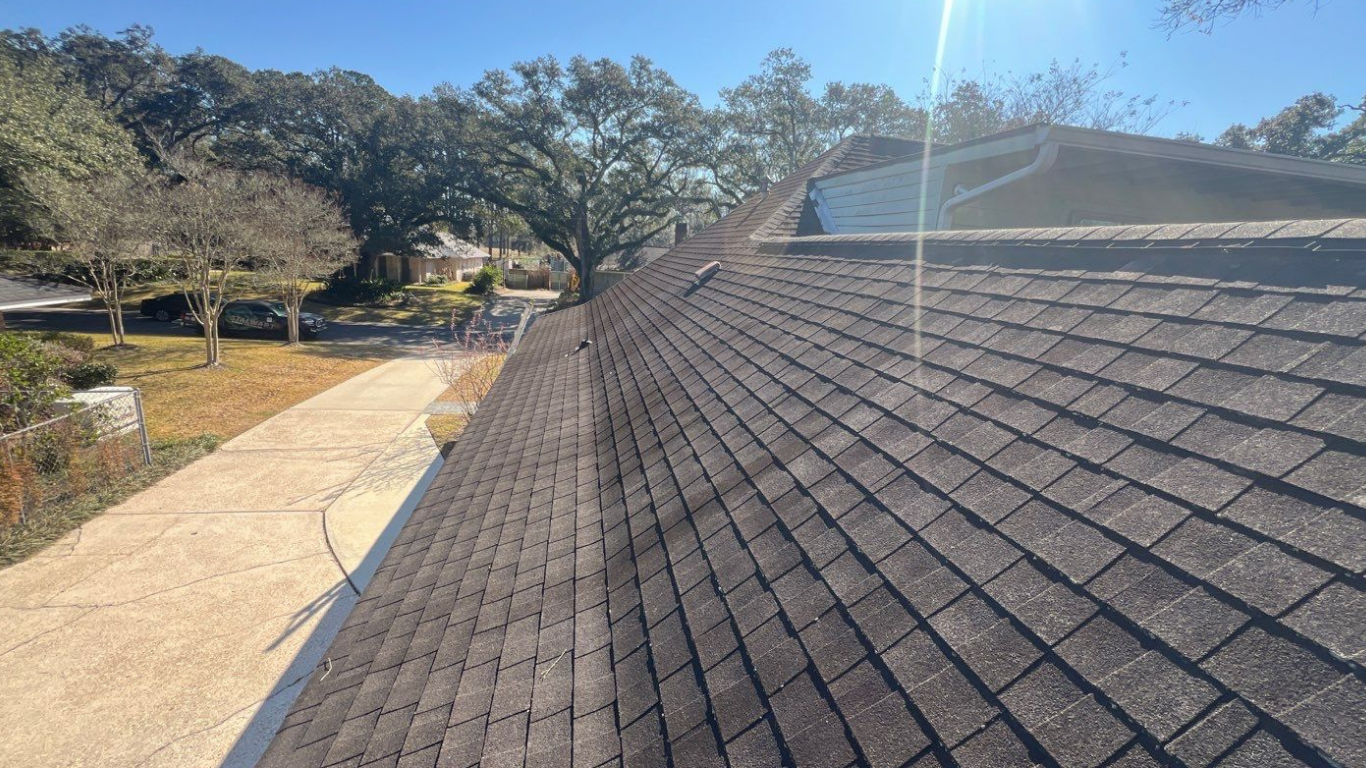
Ridge vents run along the peak of the roof and allow hot air to escape naturally. When paired with adequate intake vents, they are one of the most effective options.
Soffit vents are installed under the eaves and provide essential intake airflow, preventing moisture from stagnating in attic corners.
Gable vents allow air movement through the sides of the attic but are often insufficient alone for roof ventilation Louisiana humid climate conditions.
Roof turbines use wind power to assist airflow but depend on weather conditions and are best used as supplemental ventilation.
Powered attic fans actively remove hot air and can be beneficial in Louisiana’s heat when properly sized and balanced with intake ventilation.
Ventilation Requirements and Building Codes in Louisiana
Louisiana generally follows International Residential Code guidelines recommending one square foot of ventilation per 150 square feet of attic space, or a 1:300 ratio when balanced intake and exhaust are present.
Due to high humidity, Stalwart Roofing often recommends exceeding minimum code requirements for optimal roof ventilation Louisiana humid climate performance. Roof design, insulation levels, attic use, and local conditions all influence ventilation needs.
Signs Your Home Has Poor Roof Ventilation
Warning signs include excessively hot attics, musty odors, mold or mildew on attic wood, rusted nails, uneven shingle aging, and unusually high cooling bills. These indicate ventilation issues that should be addressed promptly.
Common Ventilation Mistakes Louisiana Homeowners Make
Blocking soffit vents with insulation or debris restricts airflow and traps moisture.
Mixing incompatible vent types can short-circuit airflow and reduce effectiveness.
Relying on exhaust without sufficient intake pulls conditioned air from inside the home, raising energy costs.
Ignoring humidity control overlooks the importance of proper insulation and air sealing.
The Role of Insulation in Roof Ventilation
Ventilation and insulation must work together. Insulation slows heat transfer, while ventilation removes heat and moisture above it. For proper roof ventilation Louisiana humid climate performance, insulation must never block airflow paths.
How Proper Ventilation Extends Roof Lifespan
A well-ventilated roof system extends shingle life, reduces repair frequency, protects roof decking, maintains warranty compliance, and improves indoor comfort. Many roofs fail early due to ventilation problems rather than material defects.
Ventilation Considerations for Older Louisiana Homes
Older homes often lack modern ventilation standards, including sufficient vent openings or soffit ventilation. Upgrading roof ventilation Louisiana humid climate systems during roof replacement is a smart long-term investment.
Ventilation During Roof Replacement
Roof replacement is the ideal time to improve ventilation because access is easier, costs are lower than retrofitting later, and airflow design can be optimized.
Storm Season and Ventilation in Louisiana
Proper ventilation reduces moisture intrusion, prevents post-storm condensation, speeds attic drying, and protects structural components. Vent systems should also be weather-resistant and storm-rated.
Energy Efficiency Benefits of Proper Ventilation
Well-ventilated homes experience lower attic temperatures, reduced HVAC strain, consistent indoor comfort, and lower monthly energy bills—especially important in Louisiana’s long cooling season.
Why Professional Evaluation Matters
Every home is different. Roof pitch, attic size, insulation type, and existing ventilation all affect airflow requirements. A professional evaluation ensures roof ventilation Louisiana humid climate needs are met accurately.
Why Choose Stalwart Roofing in Baton Rouge, Louisiana
Stalwart Roofing understands Louisiana homes because we live and work here. We specialize in roofing systems designed for heat, moisture, and severe weather, offering code-compliant ventilation, honest recommendations, and long-lasting solutions.
Final Thoughts: Protect Your Home with Proper Ventilation
Roof ventilation is essential in Louisiana. Addressing roof ventilation Louisiana humid climate requirements protects your roof, improves comfort, lowers energy costs, and preserves your home’s value.