An annual roof inspection is a once-a-year check of your whole roof system, inside and out, by a trained roofer who documents what is wearing out and what needs fixing now. Once a year is the minimum. In Baton Rouge, where summer storms, hurricane season and heavy humidity all take a toll, we recommend a second look in spring and fall, plus one after any serious storm. Below, we explain what the inspection includes, when to schedule it, what you can safely check yourself, and how to use the report.
TL;DR
- Book a professional roof inspection at least once a year. Many roofing professionals suggest twice a year, in spring and fall, and again after severe weather.
- A proper inspection covers the attic and ceilings, the roof covering, flashing, penetrations, gutters and drainage, not just the shingles.
- Between visits, look from the ground with binoculars. Do not climb onto the roof yourself.
- Keep every inspection report, photo and repair invoice in one file. It helps with repairs, warranties and a future reroof.
- Our inspections come with clear, honest findings and no sales pressure, and our work carries a five-year workmanship warranty.
Table of Contents
- Why an annual roof inspection is worth the time
- How often to inspect your roof
- What a thorough roof inspection covers
- What to look for between inspections
- After a storm: inspect first, then call your insurer
- Commercial roofs and property managers
- Keep a roof file
- Our perspective on annual inspections
- Schedule your roof inspection with us
- FAQ
- Sources
Why an annual roof inspection is worth the time
Your roof is the one part of the house you almost never see. Water finds the weak point long before you notice a stain, and by then the damage has usually reached insulation, decking or drywall.
The National Roofing Contractors Association (NRCA) guidance published by its affiliate says annual inspections help find problems before they become costly repairs and help extend the roof’s life. GAF, a major shingle manufacturer, goes further: its maintenance literature says neglecting inspection and maintenance may be the biggest cause of premature roof failure.
The economics are simple. An inspection takes a few hours at most. A cracked boot around a plumbing vent or a lifted row of shingles is a small repair today. Left alone through a wet summer, it can become rotted decking, wet insulation and mold. The American Roofing Contractors Association’s FAQ makes the same case: a few hours a year spent catching small problems is a cost-effective alternative to premature replacement.
A warranty is not a substitute. Mark Graham of the NRCA has said in the American Society of Home Inspectors’ publication that a warranty does not replace regular inspections. Many manufacturer warranties expect the owner to keep the roof maintained, so a documented inspection history protects you.
How often to inspect your roof
The short answer: one professional inspection every year, with extra checks when conditions call for them.
- Every spring: assess what winter and early-season storms did. Spring inspections help assess damage from winter weather.
- Every fall: a fall inspection helps prepare the roof for cold weather by confirming it is sealed tight and the gutters are clear of leaves and twigs. For us, fall also means checking what hurricane season left behind.
- After a major storm: hail, high winds or heavy rain. GAF advises inspecting after severe weather, because the sooner damage is repaired, the smaller the repair cost.
- When the roof is older: an aging roof, or one with past patches, deserves the twice-yearly rhythm. A newer roof can often get by with the annual visit as long as storms are checked.
The NRCA-affiliated checklist recommends inspecting at least twice a year, in spring and fall, and after a major storm. If you want the Louisiana-specific rhythm, our guides on seasonal roof inspections in Louisiana and roof inspection frequency in the Louisiana climate walk through it month by month.
Why Baton Rouge roofs need more than the national minimum
Most generic advice is written for places with a single hard season. Our roofs face several. Long, hot, humid summers bake shingles and feed moss and algae. Afternoon thunderstorms bring wind and hail with little warning. Hurricane season then adds sustained wind, wind-driven rain and flying debris, sometimes with water working under shingles from the side rather than from above.
That is why we treat the annual inspection as the baseline and the post-storm inspection as the one that matters most. If you live near large trees, as many Baton Rouge neighborhoods do, add a check after any storm that drops limbs near the house.
What a thorough roof inspection covers
A good inspection starts before anyone climbs a ladder. The NRCA advises that an inspection should begin on the ground rather than on the roof, because the condition of the building’s exterior often points to where the problems are. Here is how we run ours.
1. The inside of the house
We look at ceilings and interior walls for water stains, cracks and signs of settling. In the attic or under the roof deck, we check for moisture, dark stains, water tracks and mold. A thorough inspection checks the attic and underside of the roof as well as ceilings and walls, since the inside often shows a leak before the outside does.
2. The exterior and the roof covering
We walk the property and look at the roof from several angles, then inspect the surface itself. For shingle roofs, the signs are cracking, curling or missing pieces. We also note granule loss, lifted tabs, nail pops, and moss or algae streaks. On metal, we look at fasteners, seams and coatings. On low-slope and flat roofs, we look for ponding water, seam separation and punctures.
3. Flashing and penetrations
Most leaks do not start in the middle of a shingle field. They start where the roof meets something else. We check flashing for rust, cracks or separation and examine every penetration: vents, chimneys and skylights. Chimneys are a frequent culprit, and we repair chimney leaks as part of our roof repair work.
4. Gutters and drainage
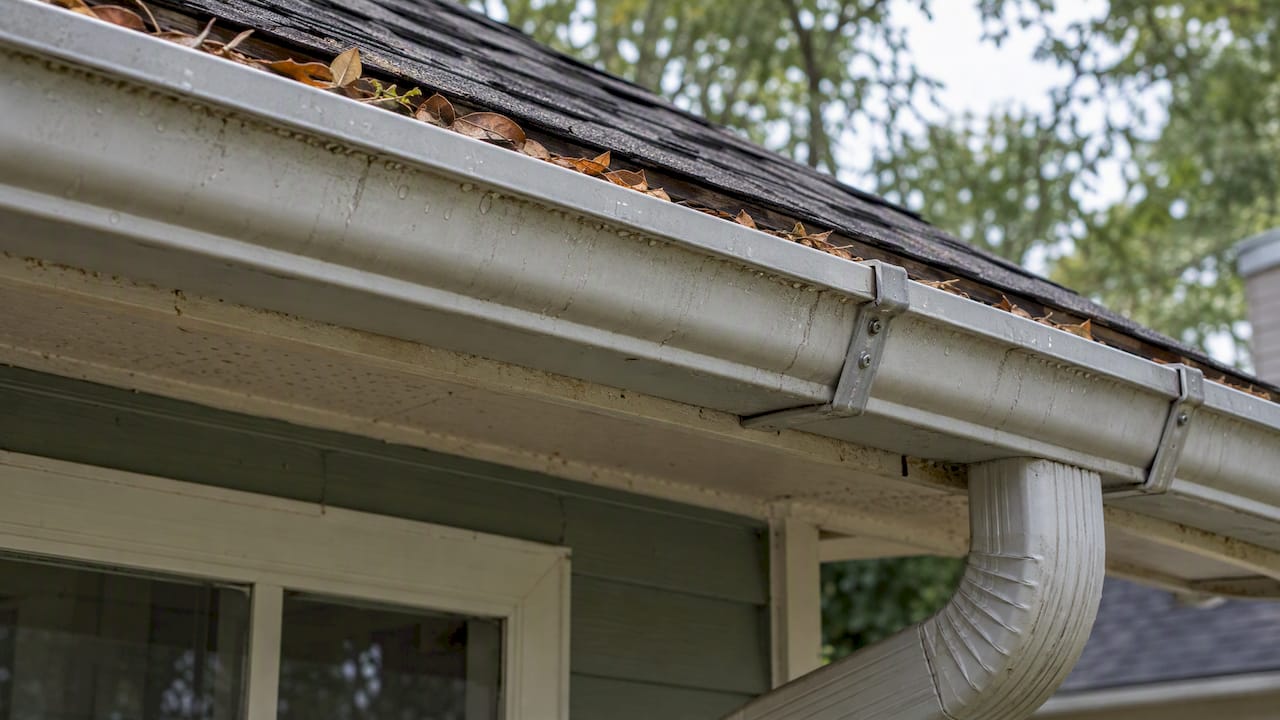
Clogged gutters push water back under the roof edge. We check gutters for debris, proper slope and secure attachment. On commercial roofs, we also inspect drains and look for standing water, which facilities inspection plans treat as a core item.
5. A written report with photos
You should leave the inspection knowing exactly what we found. We photograph problem areas, separate urgent items from watch items, and tell you plainly whether something needs a repair, can wait, or is nothing to worry about. If your roof is fine, we say so.
What to look for between inspections
You do not need to be on the roof to catch trouble early. In fact, you should not be. One consumer guide to ground-level checks notes that ladder injuries send roughly 164,000 people a year to U.S. emergency rooms, and recommends binoculars or a phone zoom instead of climbing.
Safe checks you can do yourself
- Walk the perimeter with binoculars. Look at each roof slope for missing, curled or discolored shingles, and for debris sitting in valleys.
- Check the ground. Shingle pieces, granules in the downspout outflow, or scattered debris after a storm all signal damage above.
- Look at the ceilings. Brown rings, peeling paint, or a musty smell in the upstairs rooms and closets are leak signs.
- Peek into the attic with a flashlight. Look for damp insulation, daylight where there should be none, or dark streaks on the decking. Step only on framing, never between joists.
- Watch the gutters. Overflow during rain, or sagging sections, mean drainage needs attention.
- Take dated photos. Photos from the same spots each season make changes obvious and strengthen any insurance conversation.
What to leave to a professional
Walking the roof, testing flashing, lifting shingles to check fasteners, inspecting around chimneys and skylights, and assessing storm damage for a claim are jobs for a roofer. Steep pitch, wet surfaces and brittle shingles make roofs hazardous, and a homeowner can also cause damage just by walking on aging material. Our free residential roof inspection guide explains the process so you know what to expect before we arrive.
After a storm: inspect first, then call your insurer
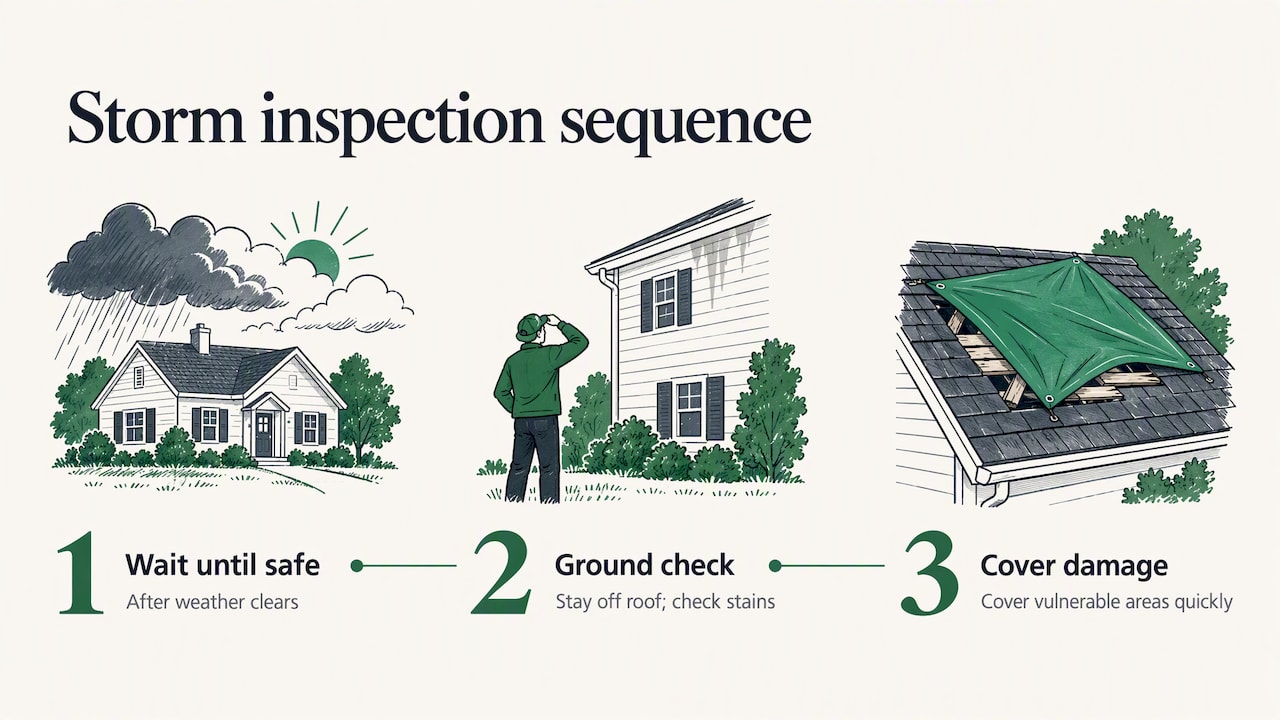
In Louisiana, the best time to inspect is right after the weather clears, once it is safe. Stay off the roof, check from the ground, and look inside for new stains. If you see damage, cover vulnerable areas quickly. We offer emergency repairs and roof tarping through our storm damage restoration service to keep rain out until permanent repairs are made.
Speed matters because water spreads. A small roof opening can soak insulation and drywall within a few rain events, and a water damage prevention checklist is a handy way to think through what else in the building to protect while repairs are scheduled.
Before you file a claim, our wind damage ground-check guide shows four things to look at from the ground. After a hurricane, read our post-hurricane roof safety tips before anyone goes near the roof. For tile roofs, see what to check and fix after a storm.
Commercial roofs and property managers
For a business or multi-family building, an annual inspection is part of asset management, not just homeowner prudence. Johns Manville says a proactive maintenance program typically costs about 1 to 3 percent of the estimated roof replacement cost each year. Compared with an unplanned replacement, or tenant disruption from a leak, that is modest.
Flat and low-slope roofs such as TPO need particular attention to seams, drains and ponding. We provide commercial inspections and ongoing maintenance for metal and TPO systems. Details are on our commercial roofing page, and our article on common commercial and multi-family roofing problems covers what we find most often.
If your manufacturer’s warranty requires periodic inspections, ask us for a written report each visit. That paper trail is your proof of compliance.
Keep a roof file
Set up one folder, paper or digital, and keep everything in it. GAF recommends keeping guarantees, inspection reports, and repair and maintenance bills, which are useful when making repairs, adding equipment or planning a reroof.
In practice, your file should hold:
- Installation date, material and contractor
- Warranty paperwork
- Each inspection report with photos
- Storm-damage photos and claim correspondence
- Repair invoices, with the location of each repair marked
When the time comes to decide between patching and replacing, this history lets a roofer give you a straight answer. Our guides to repair versus replacement in Baton Rouge and roof lifespan help with that call.
Our perspective on annual inspections
We have worked on Louisiana roofs for over 25 years, and the pattern is consistent: the roofs that cost homeowners the least are not the newest ones, they are the ones someone looked at regularly. A missing shingle or a dried-out sealant joint is a short visit. Three wet seasons later, the same spot is a decking replacement.
We also see the opposite. Homeowners who are nervous about being sold a roof put off inspections for years. That is why we keep ours free of pressure. We tell you what we see, show you the photos, and separate what is urgent from what can wait. If the answer is that your roof has years left, that is a good result for you, and we are glad to give it.
Our advice: pick a date each spring and a second in the fall, put them on your calendar, and add a storm check as needed. Keep the reports. Treat the inspection like a physical for the house.
Schedule your roof inspection with us
We inspect roofs for homeowners, business owners and property managers across the Baton Rouge area. Every visit covers the attic and interior signs, the roof surface, flashing, penetrations and drainage, followed by a clear written summary of what we found and what, if anything, we recommend. Our workmanship is backed by a five-year warranty, and we are known for transparent pricing and responsive communication.

Ready to book? See our roof inspection service or contact us through our website. If the inspection turns up a problem, we can handle the repair or, when it truly is time, a full replacement.
FAQ
Are annual roof inspections worth it?
Yes. They catch small defects such as cracked flashing, lifted shingles and clogged gutters before they turn into leaks and rot. The cost of an inspection is small compared with a repair that has spread into decking and insulation. The documentation also helps with warranties and insurance.
How often should you have a roof inspection?
At least once a year. Many roofers recommend twice a year, in spring and fall, and again after any major storm. In Louisiana, with its hurricane and thunderstorm seasons, an extra post-storm check is especially worthwhile.
How much does a roof inspection cost?
Price depends on roof size, pitch, material and whether it is residential or commercial. We do not publish a flat price, so contact us for details on your property. We also offer free residential inspections, which our step-by-step guide explains.
Can I inspect my own roof?
You can check from the ground with binoculars, look at ceilings and peek into the attic. Leave walking the roof and testing flashing to a professional. Climbing is risky and can damage aging materials.
What happens during a routine roof inspection?
The inspector checks the interior for stains, then the exterior, the roof covering, flashing, penetrations, gutters and drainage, and finishes with a written report. You should get photos and a clear list of what needs action and what can wait.
Sources
- The Ultimate Roof Inspection Checklist, NRCIA
- Scheduled Maintenance Checklist, GAF
- Frequently Asked Questions, ARCBAC
- Inspecting the Roof, American Society of Home Inspectors
- Professional Roofing, NRCA
- Building a Commercial Roof Inspection Plan, Travelers
- Owner’s Manual, Johns Manville
- How to Check Your Roof from the Ground
- Water damage prevention checklist