
Yes, roof leaks commonly cause mold, and the window to stop it is short. Stop the water source, document the damage with photos for insurance, and dry affected materials within 24 to 48 hours to keep mold from taking hold. If visible mold already covers more than 10 square feet or has reached your attic, wall cavities, or HVAC system, that’s the point to call in professional remediation rather than handling it yourself.
TL;DR:
- Stop the leak, photograph damage, and contact your insurer before major cleanup; dry affected materials within 24 to 48 hours to limit mold growth.
- Hire professional remediation if visible mold exceeds 10 square feet or reaches the attic, wall cavities, or HVAC system, even if it seems small.
- Small, contained patches on hard surfaces can be cleaned with detergent and protective gear; discard wet insulation or drywall, and never use fans on visible mold.
- After cleanup, fix the leak fully, improve attic ventilation, clear gutters, and inspect roof seals regularly to reduce the chance that moisture and mold return.
Table of Contents
- How a roof leak creates the right conditions for mold
- Warning signs that indicate mold from a roof leak
- Immediate steps to take now (first 24 to 48 hours)
- DIY cleanup: what you can safely do, what to throw out, and PPE
- When to hire professionals: remediation, roofing repair, and coordinated work
- Prevention: steps to stop mold from returning after repairs
- How we handle roof-leak mold cases at Stalwart Roofing
- Protect your home from roof-leak mold with Stalwart Roofing
- FAQ
- Sources
How a roof leak creates the right conditions for mold
Mold needs moisture, an organic food source, and time. A roof leak supplies all three faster than most homeowners expect. Water doesn’t just drip straight down: it can run under shingles, travel along rafters, and pool in spots far from where the leak started, creating hidden wet pockets that go unnoticed for weeks.
Once that water settles, it meets plenty of food for mold. Attic insulation, roof decking, and exposed framing lumber are porous and hold moisture well, which makes them ideal substrates for mold growth. Poor attic ventilation can let humidity linger after the rain stops, turning even a small, slow leak into a persistent mold source rather than a one-time problem.
A few conditions make this worse in practice:
- Dark, enclosed attic spaces rarely dry out on their own, even after the leak is patched.
- Batt insulation traps water against the decking instead of letting it drain or evaporate.
- Heat and humidity can make it harder for damp materials to dry, giving mold an opportunity to grow.
Warning signs that indicate mold from a roof leak
Most roof-leak mold starts somewhere you can’t see, so trust your nose as much as your eyes. A musty, mildewy smell in an upstairs room or when you open the attic hatch can be a clue, even before visible staining appears.
Visible signs typically follow:
- Black, green, or gray patches on rafters, decking, or ceiling drywall.
- Brown water stains, bubbling paint, or a ceiling that feels soft or sags.
- Insulation that looks clumped, matted, or feels unusually heavy and damp.
- Increased coughing, sneezing, or allergy-like symptoms among people in the house.
Sometimes there’s no visible spot at all, just a smell that won’t go away or symptoms that flare up whenever the HVAC system runs. That combination may indicate hidden mold, including above ceiling tiles or inside wall cavities near the leak’s path.
Immediate steps to take now (first 24 to 48 hours)
What you do after discovering a leak can affect whether the response involves drying materials or professional remediation. Work through these in order:
- Stop the water. Use a tarp or bucket to manage the immediate leak, then schedule a temporary roof repair or emergency fix as soon as possible.
- Document everything. Photograph the damage, note the date and time, and contact your insurer before major cleanup begins, since most policies expect documentation prior to repairs.
- Dry the area fast. Remove standing water, run fans and dehumidifiers where mold hasn’t yet appeared, and aim to have materials dry within 24 to 48 hours.
- Protect vulnerable people. Keep anyone with asthma, allergies, or a weakened immune system away from the affected area until it’s clean and dry.
- Hold off on fans if mold is visible. Moving air across active mold growth spreads spores through the house instead of containing them.
Pro Tip: Keep a simple log with timestamps and photos from day one. It makes the insurance claims process faster and gives your roofer a clear record of how the leak progressed.
DIY cleanup: what you can safely do, what to throw out, and PPE
Small, contained mold problems on hard surfaces are reasonable to handle yourself. A small, contained patch on a non-porous surface may be manageable with proper precautions. For roof-related mold, consider a professional assessment.
Before you start:
- Wear an N95 mask or better, gloves, and eye protection, and isolate the area with plastic sheeting.
- Never mix bleach and ammonia; the combination produces dangerous fumes.
- Scrub with detergent and water, let the surface dry fully, and keep airflow away from the rest of the home during cleaning.
- Seal and discard anything porous that got wet: soaked insulation, saturated drywall, and water-stained ceiling tiles.
Trying to “treat” moldy insulation with a spray or sealant doesn’t work. Once insulation is wet and moldy, it needs to come out, not be cleaned in place.
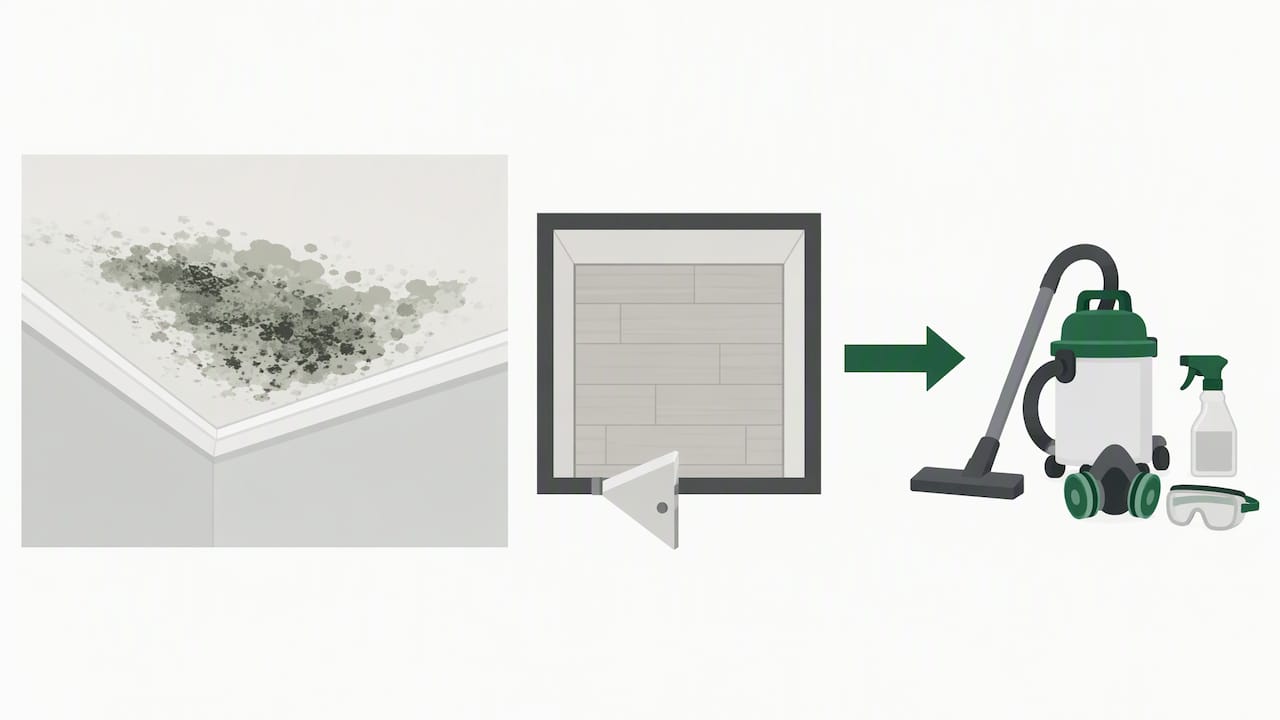
Professional remediation is generally required once visible mold covers more than 10 square feet, an area roughly the size of a small closet floor. Past that threshold, the standard industry guidance calls for trained remediation rather than a DIY approach.
When to hire professionals: remediation, roofing repair, and coordinated work
Some situations call for professional help regardless of the square footage involved. Use these as your signal to stop and call in a specialist:
- Visible mold exceeds 10 square feet, a threshold for professional remediation.
- Mold has reached the attic, wall cavities, or HVAC ductwork, areas that are hard to access and easy to under-treat on your own.
- The leak itself hasn’t been fully repaired yet. Address the water source as part of remediation to help prevent mold from returning.
When you bring in a remediation company, ask how they’ll contain the work area, dispose of contaminated material, and verify the space is clean once they finish. If structural repairs are needed, that work should be coordinated directly with a roofing contractor so the fix and the cleanup happen on the same timeline.
Prevention: steps to stop mold from returning after repairs
Once a leak is fixed and the mold is gone, the goal shifts to making sure it doesn’t come back. A few habits go a long way:
- Inspect flashing, shingles, and roof seals regularly, and repair small issues before they become active leaks.
- Keep gutters clear so water drains away from the roofline instead of backing up under shingles.
- Improve attic ventilation and check that insulation fits properly against vapor barriers to cut down on condensation.
- Schedule a routine roof inspection regularly and address damage as soon as it’s spotted.
Pro Tip: After any major roof repair, check the attic and ceiling again during the first heavy rain. It’s the fastest way to confirm the fix actually worked.
How we handle roof-leak mold cases at Stalwart Roofing
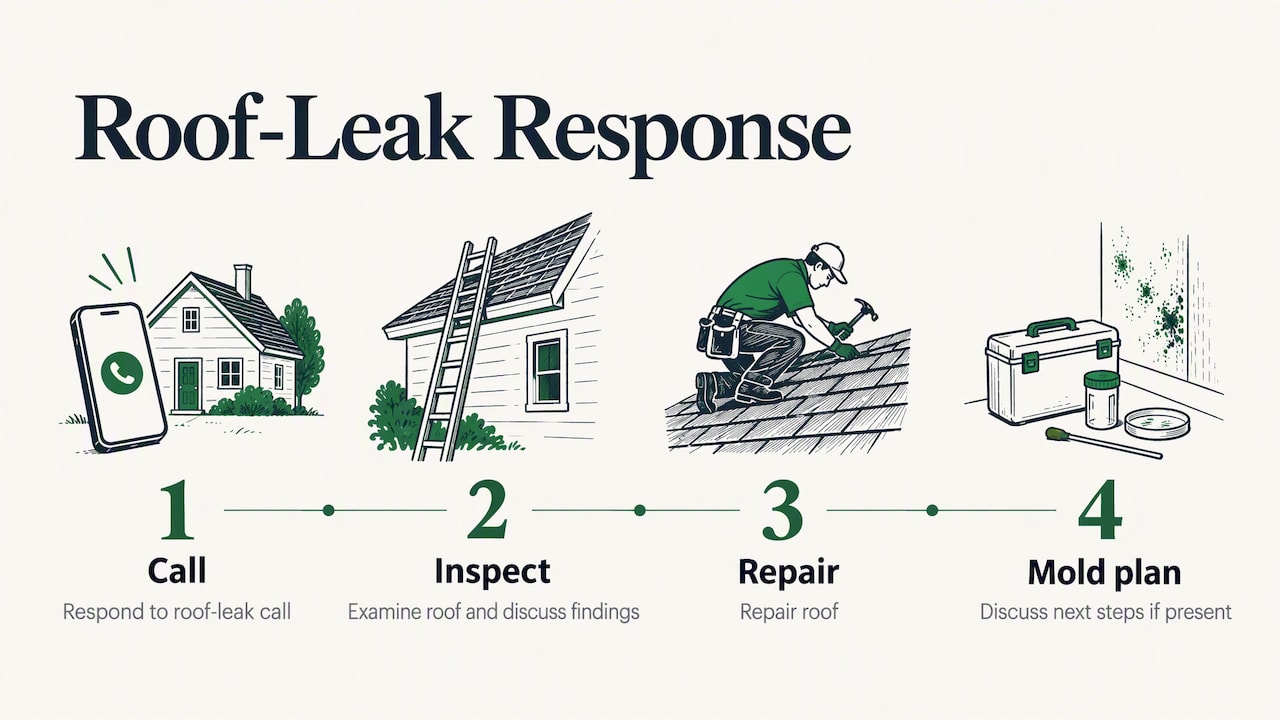
When we respond to a roof-leak call, we inspect the roof and discuss what we find. From there, we can repair the roof and discuss next steps if mold has already set in. We offer a five-year workmanship warranty on roof work, and our inspections can help identify leaks before they become larger problems.
Protect your home from roof-leak mold with Stalwart Roofing
An inspection can help identify a leak early, before it leads to more extensive damage or mold remediation. Based in Baton Rouge, we work with homeowners across the area to find and fix leaks before they turn into a bigger problem.

- Schedule a roof inspection to check for hidden leaks before they cause damage.
- Need a leak fixed now? Our roof repair team can address the leak.
This article is general information, not a substitute for advice from a qualified doctor. Consult a qualified healthcare professional about your own circumstances before acting on anything here.
FAQ
Will a roof leak cause mold in my home?
Yes, a roof leak commonly leads to mold because it introduces moisture into materials like insulation, drywall, and wood framing that mold needs to grow. Drying those materials within 24 to 48 hours after the leak is the most reliable way to prevent growth from starting.
What are common warning signs of mold exposure?
Mold exposure can cause allergic reactions, asthma symptoms such as coughing and wheezing, shortness of breath, and skin irritation, even in people without a known mold allergy, according to the CDC. Persistent respiratory symptoms that improve when you leave the house are a common clue that mold may be the cause.
Is mold on my ceiling actually harmful?
Ceiling mold from a roof leak can pose a health risk, since it typically means moisture has been sitting in the material long enough for mold to establish itself, and exposure can trigger the respiratory and allergic symptoms described by the CDC. It’s also a sign the leak above it needs attention before the damage spreads further.
How do I get rid of mold on or near my roof?
Small patches on non-porous surfaces can often be cleaned with detergent and water while wearing proper protective gear, but porous materials like wet insulation or saturated drywall need to be removed and replaced rather than cleaned in place, per EPA guidance. Once mold covers more than 10 square feet or reaches the attic or HVAC system, professional remediation paired with a completed roof repair is the recommended path.