If your roof is structurally sound and dry, a coating usually saves money and cuts disruption to a few days. If the deck or insulation is wet, or the roof is near the end of its rated life, replacement is the sound choice. The decision hinges on three things: current roof condition, remaining service life, and total lifecycle cost. GAF’s guidance and the Department of Energy’s cool roof guide both start with the same step: an inspection. We build our own roof inspections around that same principle.
A moisture survey, with core cuts when needed, should check insulation and deck condition; skip contractors who quote coatings before testing.
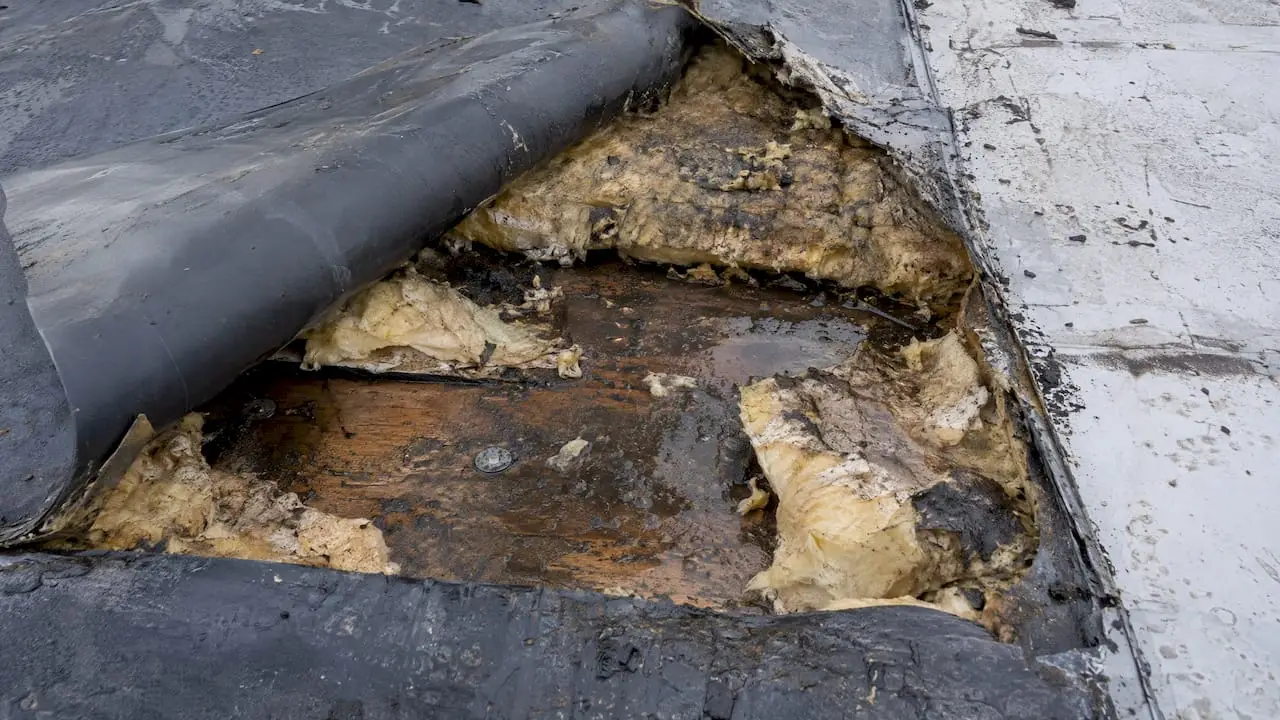
If trapped moisture covers 25% or more of the roof, industry practice generally favors tear off; wet insulation or a damaged deck also requires replacement.
Coatings need recoating every several years, so compare recurring material and labor costs with repairs, disposal, and eventual replacement over your ownership period.
Coating work often finishes in a few days, while replacement can take a week or more and brings greater noise, debris, and weather exposure.
Get moisture survey results and warranty coverage in writing, including materials, workmanship, and coverage length, before approving any coating or replacement project.
Table of Contents
What roof coatings are and their pros and cons
A roof coating is a liquid-applied, elastomeric membrane sprayed or rolled over an existing roof to seal, waterproof, and extend its service life. The three common families are acrylic, silicone, and polyurethane, each suited to different substrates and climates according to the DOE’s cool roof selection guidelines.
Coatings work well on roofs that are dry, structurally sound, and well attached, which is why eligibility matters more than preference.
Lower upfront cost than a full tear-off, with a faster installation window.
Far less tear-off waste going to a landfill.
Reflective or “cool roof” formulations can lower cooling loads in warm climates.
They cannot fix a wet deck, saturated insulation, or structural movement.
Adhesion depends on thorough cleaning and surface prep before application.
Most coating systems need a recoat every several years to keep performing, and that recurring cost belongs in any honest comparison with replacement. Our commercial roof coatings work follows this same prep-first process.
What full roof replacement involves and when it’s required
Replacement means removing the existing roof system down to the deck, or in some cases installing a recover layer over sound existing material, then building a new assembly from the deck up. It corrects what a coating cannot: saturated insulation, a damaged deck, or structural concerns that compromise the whole system.
Full tear-off exposes and lets us repair or replace a compromised deck.
New insulation and membrane reset the clock on expected service life.
A fresh installation can qualify for stronger manufacturer and workmanship warranties.
The project costs more and takes longer than a coating.
Disruption is greater, since tear-off generates noise, debris, and open-roof exposure during the work.
When damage is widespread rather than isolated, replacement addresses the root cause instead of sealing over a problem that keeps resurfacing. Our residential roofing team walks owners through tear-off scope before any work begins.
Comparing cost and expected service life over time
A fair comparison never stops at the installation invoice. It has to include repairs, recoats, inspections, disposal fees, and the timing of an eventual replacement, measured over however long you plan to own the property.
Tear-off and disposal costs apply only to replacement, since coating skips demolition entirely.
Labor and roof access charges scale with roof size and pitch for both options.
Insulation replacement is a replacement-only cost when the existing substrate is wet.
Coating material and recoat frequency are the recurring cost unique to the coating path.
Expect coating systems to need a recoat every several years, with total renewed life measured in years rather than decades, while a properly installed replacement is built to run for a much longer stretch before the next major decision point.
A widely used threshold flags replacement when repair costs exceed a significant fraction of full replacement cost or the roof is approaching the end of its rated life, according to The Roofing Brief’s repair guidance. A second signal from industry moisture-survey practice: when more than 25% of the roof area shows trapped moisture, a tear-off is generally recommended over coating, per GAF’s commercial roofing comparison.
Practical decision checklist: inspection items and red flags
A reliable recommendation starts with a moisture survey, sometimes backed by core cuts, to see what’s happening below the surface. That single step separates a roof that’s a good coating candidate from one that needs full replacement.
Moisture survey and, when needed, core cuts to check insulation and deck condition.
Attachment, seam integrity, penetrations, flashing details, and drainage or ponding areas.
Granule loss, widespread leak history, and any soft or spongy deck areas.
Overall roof age against its rated service life.
Ask any contractor whether they perform a moisture survey before quoting a coating. A bid that skips testing and jumps straight to a low price is a red flag, since coating over a hidden moisture problem locks in a failure instead of fixing it, a concern IBHS survey practice guidance raises directly.
Pro Tip: Ask to see the moisture survey results in writing before agreeing to a coating, not just a verbal “it looked fine.”
Project practicals: prep, timeline, and warranties
Coating projects start with cleaning, spot repairs, seam reinforcement, and an adhesion test, then typically wrap in a few days depending on roof size. Replacement follows a longer sequence: tear-off, deck and insulation repair, new membrane installation, flashing work, and site cleanup, often taking a week or more.
Coating disruption is minimal: limited noise, no open-deck exposure, shorter access needs.
Replacement disruption is greater: expect noise, debris removal, and a roof that’s open to the elements during parts of the work.
Confirm in writing what each warranty covers: materials, workmanship, and the length of coverage.
We put the scope of work and warranty terms in writing before any project starts.
How storms and severe weather change the decision
After a hurricane, hail event, or high winds, IBHS guidance recommends evaluating the deck and underlying structure, not just visible surface damage. Storm events often rule out coating as an option, since wind uplift or wind-driven water can compromise attachment or soak insulation in ways that aren’t visible from the ground.
If a storm has hit your property, document the damage with photos, tarp any active leaks, and schedule an inspection quickly. Our storm damage restoration team handles tarping and assessment together so a hidden moisture problem doesn’t turn into a bigger repair later.
How we evaluate your roof before recommending a path
Our free inspection includes a moisture check, a review of seams, flashings, and drainage, and a look at deck condition where access allows. We document what we find with photos and a plain-language explanation, then present a specific recommendation for coating or replacement.
Our take on the coating versus replacement decision
Skip any contractor who quotes a price before checking for moisture. The right call depends on what’s under the surface, not on which option sounds cheaper on the phone. Get the inspection first, then make the decision.
Get a free inspection before you decide
A confident coating-versus-replacement decision starts with a real look at your roof, not a guess. We offer free inspections across our service area and give you a transparent estimate either way.
If your roof checks out dry and sound, we’ll tell you that too. Book a roof inspection or, if you already know you need a full replacement, request a quote on residential roofing and we’ll walk you through next steps.
FAQ
What are the disadvantages of roof coatings?
Coatings can’t fix a wet deck, saturated insulation, or structural damage, so they’re only appropriate when a moisture survey confirms the roof is dry and sound. They also need periodic recoats to keep performing, which adds a recurring cost over time.
Is roof coating worth the money?
Coating is worth it when the existing roof is dry, well attached, and structurally sound, since it costs less upfront and creates far less disruption than a tear-off. It’s not worth it on a roof with widespread moisture or deck damage, where it would only mask a problem that keeps growing underneath.
How many years does roof coating last?
Coating systems typically need a recoat every several years to maintain protection, with total renewed life measured in years rather than decades. The exact interval depends on the coating type (acrylic, silicone, or polyurethane) and local climate exposure.
What is the 25% rule for roofing?
Industry moisture-survey practice generally recommends a full tear-off instead of a coating when moisture is detected in 25% or more of the roof area, since coating over that much trapped moisture tends to hide rather than solve the problem.