Roof decking needs replacement when it has failed structurally: delaminated layers, widespread soft or spongy spots, sagging, or panels that can’t hold a nail to the required depth. Surface stains alone rarely call for it, and the final answer often comes only after the shingles come off. Failing decking can put the whole roof system at risk, and may affect shingle warranty coverage. Check the manufacturer’s terms.
- Patch isolated damage only when sound decking surrounds it; widespread soft spots, sagging, or delamination call for full replacement, not shingles over weak wood.
- Require a written per sheet price by material and thickness, plus photos of exposed decking before it is covered; hidden damage may require framing repairs.
- Common panels include 7/16 inch OSB and 1/2 inch plywood, but thickness must match rafter spacing, local code, and manufacturer guidance.
- Balance soffit intake with ridge exhaust, repair leaks promptly, and inspect the attic after storms; damp insulation or musty odors can signal moisture early.
Table of Contents
- How do you spot the signs that decking needs replacement?
- What causes roof decking to fail?
- Which decking materials and code basics should you know?
- When is a spot repair enough, and when do you need re-sheathing?
- How do contractors replace roof decking, step by step?
- How much does decking replacement cost, and how do you budget for it?
- How long does it take, and are permits required?
- What should you ask a contractor before signing?
- How can you prevent decking failure?
- How does Louisiana weather affect roof decking?
- What do we see most often on Louisiana roofs?
- How can we help with your roof decking?
- FAQ
- Sources
How do you spot the signs that decking needs replacement?
You can triage a lot from the ground and from the attic before anyone climbs a ladder. Here is what we look for first on the roof itself:
- Soft or spongy spots that give underfoot
- Sagging roof lines between rafters
- Delamination, where plywood layers peel apart
- Holes or crushed panels
- Nails that spin loose or pull through
Inside the house, the attic tells the rest of the story:
- Water stains paired with a sagging ceiling
- Visible mold or rot near the rafters
- Heavy staining concentrated under roof penetrations such as vents and chimneys
Not every stain means a new deck. Roof decking has to be replaced when it shows structural failure, and surface staining alone does not necessarily mean that kind of failure.
Take photos of every symptom, and write down when you first noticed it. A dated photo trail helps an inspector see whether a problem is getting worse, and it gives you something concrete to compare against the estimate later.
What causes roof decking to fail?
Decking rarely fails on its own. Something keeps it wet, and wood that stays wet eventually rots. The usual culprits:
- Poor attic ventilation. Guidance from the Department of Energy calls for outside air to enter low at the eaves and exit high at the ridge, with net free vent area guidance that pairs continuous soffit vents with ridge or other high vents. When intake and exhaust are out of balance, moisture builds up under the deck.
- Chronic leaks and bad flashing. A small leak at a chimney or vent can soak the same few panels for years.
- Ice and water intrusion at the eaves. Water that backs up under the first courses of roofing wets the lowest panels first.
- Installation mistakes. The wrong panel thickness or unsupported end joints weaken a deck from day one.
- Age and insects. Older decking dries out, cracks, and can attract wood-boring pests.
Pro Tip: Ask any inspector to check the attic for both soffit and ridge airflow, not just the shingles. Fixing the moisture source matters as much as replacing the wet panels.
Even a careful inspection has limits. The full extent of the damage is usually discovered during tear-off, once the shingles and underlayment are gone and every panel is exposed.
Which decking materials and code basics should you know?
Most homes have either plywood or oriented strand board (OSB) under the shingles. Plywood tends to hold up well when it gets wet and dries out, and it often costs a bit more. OSB is common, economical, and stable when kept dry, though its edges can swell if exposed to moisture for a long time. Both work when they are the right grade and thickness for the framing.
A few points worth knowing when you review a proposal:
- Common thicknesses include 7/16″ OSB and 1/2″ plywood, but the right choice depends on rafter spacing, local code, and manufacturer guidance.
- Panels carry an exposure rating that tells you how much weather they can take before the roof goes on.
- Panel end joints should land on a rafter so every edge is supported.
- Fasteners should follow a consistent pattern with small gaps between panels for expansion.
A re-sheathing guide from Frontier Foam stresses matching panel thickness to code and span requirements and repairing framing before new decking goes down. This is also why good crews protect fresh panels with underlayment right away. Bare decking exposed to rain can swell and fail early.
When is a spot repair enough, and when do you need re-sheathing?
The deciding factor is whether the damage is isolated or systemic. One bad panel over a single rafter, with solid wood all around it, can usually be patched. Multiple damaged panels, delamination, or soft spots spread across a slope point to full replacement.
Here is how we frame the decision:
- Patch when the damage is isolated and sound decking surrounds it.
- Re-sheathe when soft spots, sagging, or delamination show up in several areas.
- Replace compromised decking instead of covering it, because new shingles can’t grip a weak nail base.
Contractors commonly find this damage mid-job. Roofing professionals note that spot decking replacement is often added as a separate line item during the roofing project. That is one reason the contract matters so much, which we cover in the cost section below.
Covering bad decking is tempting because it looks cheaper, but it carries a real price. Shingles nailed into weak wood can loosen, and manufacturers may not honor warranties on roofs built over failing decking. If you are weighing a new layer over the old roof, our guide to roofing over existing shingles lays out the tradeoffs.
How do contractors replace roof decking, step by step?
Knowing the sequence helps you spot what is happening on your roof. A typical job runs like this:
- Inspect and document. The crew photographs the roof and marks suspect areas before work begins.
- Tear off the old roofing. Shingles and underlayment come off down to bare decking.
- Inspect the exposed sheathing and rafters. This is where hidden rot, delamination, and fastener problems show up.
- Remove damaged panels. The bad sections are cut out, and any damaged rafters are repaired or reinforced.
- Install new panels. Fresh decking goes in from the eave toward the ridge, with correct fasteners and small expansion gaps.
- Dry in the roof. Temporary or final underlayment goes down right away to keep weather out.
- Install flashings and finish roofing. New flashing and shingles complete the system.
- Clean up and do a final inspection. The crew clears debris, checks for stray nails, and walks the finished roof.
The framing and decking steps follow the same order described in the Frontier Foam re-sheathing guide: repair what’s underneath first, then lay new panels from the eave up.
Hidden problems are what stretch a schedule. A rotted rafter may need repair, and mold on the underside of the deck may need remediation before new panels close it in. Each adds time and cost, which is why a contingency belongs in your budget.
Pro Tip: Ask the crew to send you photos of the bare deck after tear-off, before they cover anything. You will see exactly which panels were replaced and why.
How much does decking replacement cost, and how do you budget for it?
Cost depends on roof size, panel material and thickness, local labor rates, and how much hidden damage turns up. Angi publishes a current price breakdown in its roof decking replacement cost guide, a useful benchmark before you collect estimates.
The biggest cost drivers are straightforward:
- Labor to remove and install panels
- Disposal of old materials
- Hidden framing repairs such as rafter fixes
- Permit and disposal fees where they apply
The best protection against a surprise bill is a separate, unitized line item. The recommended practice is to insist on a pre-defined unit price per sheet, broken out by material and thickness.
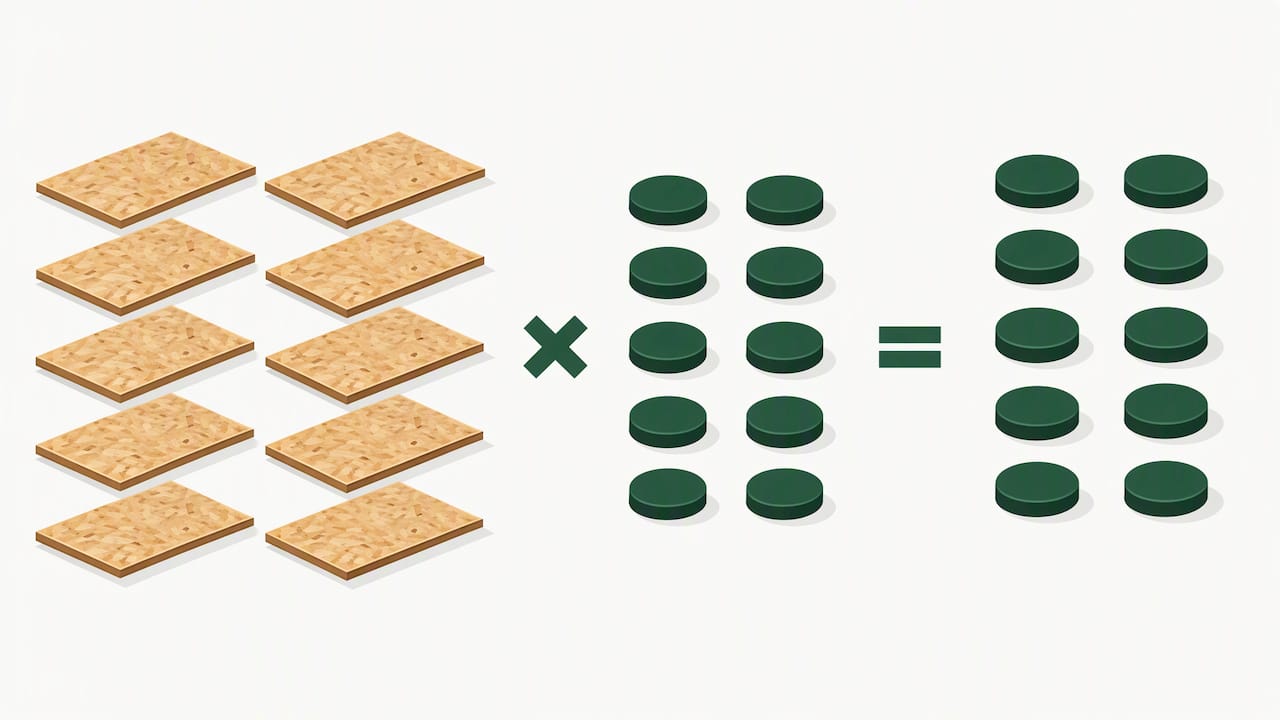
Here is an illustrative scenario. Say your contract lists 1/2″ plywood at a fixed price per sheet. The crew finds ten bad sheets after tear-off. You multiply ten by that agreed price, add nothing else, and the extra cost is clear before work continues. Without a unit price, the same discovery becomes a negotiation on a half-open roof.
Set aside a contingency for the unexpected, since damage found at tear-off can’t be known in advance. Ask us or any contractor what that cushion should look like for a roof of your age and condition.
How long does it take, and are permits required?
The time required for a roof replacement depends on the project, and our roof replacement timeline explains how hidden repairs can add time. Decking work can take longer when rafters need repair or mold needs attention.
Keep these expectations in mind:
- Weather sets the pace. Crews work in dry windows and cover open sections with temporary protection so rain never reaches the interior.
- Staging matters. Good crews strip only what they can dry in the same day.
- Permits and inspections are local requirements in many jurisdictions, and contractors usually handle the paperwork.
What should you ask a contractor before signing?
A good contract removes guesswork. Before you sign, ask:
- How will you document damaged decking?
- Will you price replacement per sheet?
- What happens if you find damaged rafters?
- What does the warranty cover?
The contract should include a separate decking line item by material and thickness, photo documentation, cleanup and disposal terms, a timeline with milestones, and payments tied to completed work.
Watch for red flags: vague “we’ll see” pricing, a refusal to itemize, no proof of insurance, or pressure to sign on the spot. If a crew’s work also touches the roof surface for add-ons, such as roofline lighting, ask how they avoid new penetrations. One local lighting installer explains how to avoid drilled shingles on shingle roofs.
At our company, we document the deck before and after.
Pro Tip: Get the per-sheet price in writing before work starts. A number agreed on a calm day beats one negotiated mid-tear-off.
How can you prevent decking failure?
Most decking problems are moisture problems, so prevention is mostly about keeping the roof system dry and breathing.
- Keep attic ventilation balanced, with soffit intake and ridge exhaust, and add baffles where insulation blocks airflow. Our attic ventilation guide covers the practical details.
- Fix flashing, vent boots, and small leaks quickly, and keep gutters clear so water doesn’t stand at the eaves.
- Schedule periodic roof and attic inspections, and photograph conditions so changes stand out.
- Air seal the attic floor and insulate properly so warm, humid indoor air doesn’t migrate into the deck. The Department of Energy’s Guide to Durable Attics stresses air sealing, insulation, and ventilation baffles to protect sheathing.
Pro Tip: Check your attic after the first big rain each season. Damp insulation or a musty smell is an early warning that costs far less to fix than rotted decking.
How does Louisiana weather affect roof decking?
Our climate is hard on wood. Long, humid summers keep attics warm and damp, and warm, moist air condenses on cool surfaces whenever the temperature drops. If ventilation is weak, that moisture settles into the decking night after night.
Heavy rain and tropical storms add another layer of stress. Wind-driven rain finds weak flashing, torn shingles, and exposed edges, and a single storm can soak panels that were already marginal. Because decking stays wet longer in humid air, damage that began with one leak can spread well beyond it before anyone sees a stain.
This shapes timing. After a major storm, we recommend an inspection even when nothing looks wrong from the ground, since damp decking can hide under intact shingles. During our rainy stretches, crews also plan around forecasts, tearing off in sections and drying in the same day. If your roof is aging, scheduling replacement ahead of peak storm season gives you more control over the calendar than waiting for a failure. Our guide to roof inspection frequency in Louisiana’s climate explains how often to check in.
What do we see most often on Louisiana roofs?
In our experience, the most common surprise at tear-off is rot that started small, often around a vent, chimney, or eave, and quietly spread. Homeowners usually saw only a faint ceiling stain, so photographing the bare deck before it is covered matters. Those photos show you what we found and why we replaced it.
We inspect before we quote and price decking in clear line items. If you suspect trouble, schedule an inspection and we will give you itemized decking pricing.
How can we help with your roof decking?
We handle the whole job, from the first look to the last cleanup. Our team offers:
- Roof inspections to assess and document decking condition
- Deck re-sheathing and full roof replacement through our residential roofing service
- Storm damage restoration and emergency repairs
- Transparent, itemized estimates
Ready to know where your deck stands? Book a roof inspection and request a detailed estimate.
FAQ
Is it expensive to replace roof decking?
It depends on roof size, panel type, and how much hidden damage is found. Decking is usually a smaller line than the roof itself, but surprises add up, which is why a per-sheet price in your contract helps. Angi’s decking cost guide is a useful benchmark.
Will insurance pay for new roof decking?
Coverage varies by policy and cause. Whether insurance covers decking depends on your policy and the cause of the damage. Check your policy and ask your agent before work starts.
What is decking when replacing a roof?
Decking, also called sheathing, is the layer of plywood or OSB panels nailed to the rafters. It is the structural base for the roofing system, giving shingles a solid surface to attach to.
Can you put new roof decking over old?
Generally no. New panels need to attach to the rafters, and leaving rotted decking in place leaves a weak nail base and trapped moisture. Compromised panels are removed and replaced.
Sources
- How Much Does Roof Decking Cost to Replace? 2026 Data
- Repaircostledger
- Measure Guideline: Guide to Attic Air Sealing
- Re Sheathing a Roof: A Comprehensive Guide to Replacing Roof Sheathing – Frontier Foam