After a storm, get a roof inspection as soon as it is safe, ideally before the next rain, and before any permanent repair. Start from the ground: look for missing shingles, bent flashing and debris, and check the attic for daylight or stains. Then have a licensed roofer examine the surface up close, because granule loss, lifted shingles and hairline cracks are easy to miss from the yard. We inspect storm-hit roofs across Baton Rouge and the surrounding parishes, and our inspections are free.
Key Takeaways
- Safety first: stay off the roof, stay out of a house with a tree on it or open walls, and photograph everything before touching anything.
- Check the attic and the outside of the house from the ground. Both tell you whether a professional inspection is urgent.
- Temporary protection, such as a tarp, is allowed and expected. Permanent repairs wait until your insurer has seen the damage.
- A roofer’s inspection documents the damage. Your insurance company, not the roofer, decides what is covered.
- In Louisiana, wind and water damage can come from any storm season, so inspect after every significant event, not only after hurricanes.
Table of Contents
- Why Louisiana Roofs Need an Inspection After Every Serious Storm
- What to Do in the First Hours After the Storm
- How to Check Your Roof for Storm Damage Safely From the Ground
- What a Professional Storm Damage Roof Inspection Covers
- How to Document Storm Damage Before Anyone Touches the Roof
- Tarping and Temporary Repairs: What Is Allowed
- Inspection vs. Insurance Decision: Who Decides What
- Repair or Replace: What the Inspection Tells You
- Inspecting After Storms Across the Baton Rouge Area
- Book a Free Storm Damage Roof Inspection
- Our Perspective
- FAQ
- Sources
Why Louisiana Roofs Need an Inspection After Every Serious Storm
Louisiana roofs take a beating from tropical storms, straight-line winds, tornado-spawning thunderstorms, hail and weeks of heavy rain. Damage rarely looks dramatic. A shingle lifted by wind and pressed back down can look fine from the street and still let water in at the next downpour. Water then moves along the decking and into the insulation, and you see a stain on the ceiling weeks later.
That delay is the reason inspection timing matters. The sooner the damage is found and documented, the easier it is to link it to a specific storm, to protect the home from further water, and to keep the claim clean. When a disaster or emergency is declared, Louisiana law (La. R.S. 22:1264) gives property owners in the declared area at least 180 days from the event to submit proof of loss, according to the Louisiana Department of Insurance. Your own policy may set shorter notice requirements, so call your insurer promptly and read your policy.
What to Do in the First Hours After the Storm
The Better Business Bureau’s storm guidance puts the order plainly: make sure everyone is safe, then assess and document the damage before you contact your insurer. In practice:
- Check for injuries and hazards. Downed power lines, gas smells and standing water come before the roof.
- Stay out if the structure looks compromised. If a tree is on the roof, or roof or wall sections are blown open, stay out until a contractor has checked for structural damage.
- Photograph and video everything inside and outside the house before cleanup.
- Call your insurance company to open a claim.
- Protect the home from further damage, then hold permanent repairs until the insurer approves.
If water is already coming in, we can tarp the roof quickly. Our storm damage restoration work includes emergency roof tarping, and our guide to emergency roof tarping after a storm explains what a proper tarp job involves.
How to Check Your Roof for Storm Damage Safely From the Ground
You do not need a ladder to decide whether you need an inspection. GAF’s homeowner guide uses a simple three-part check: the inside, the outside, and the roof itself only if you can climb safely with fall protection. We suggest you do the first two and leave the third to a professional.
Inside: the attic and ceilings
Go into the attic in daytime with a flashlight. Look for:
- Daylight coming through the roof deck
- Wet or dark stains on the wood or insulation
- Sagging decking or rafters
- Water marks around chimneys, vents and valleys
On the floors below, check ceilings and the upper corners of walls for new brown rings, bubbling paint or drips. A stain that appears after a storm is a sign to book an inspection even if the roof looks intact outside.
Outside: walk the perimeter
Walk around the house slowly, with binoculars if you have them. Look for:
- Missing, cracked, curled or creased shingles
- Shingle pieces and debris in the yard or flower beds
- Bent, lifted or detached flashing, the metal that seals joints around chimneys, vents and walls
- Displaced chimney metal or damaged exhaust pipes
- Damage along valleys and roof edges
- Granules collecting in gutters or at the downspout
That last item matters more than it seems. Loose granules are not just grit: they shield the asphalt from ultraviolet light and add fire resistance, and losing them signals shingle impact. Hail damage on asphalt shingles often shows up as small round bruises where granules were knocked away, exposing the black asphalt mat beneath, and those marks are easy to miss from the ground.
Wind damage: look at direction
Wind usually hits one side of a house harder. If the damage is concentrated on one slope and the opposite slope is clean, that pattern points to a specific storm and wind direction. Our guide to four ground checks for wind-damaged shingles walks through what to look for before you file.
Why you should not go up there
Wet shingles, loose granules and a steep pitch make a roof dangerous, and a fall is a far bigger loss than a shingle. The close-up work is best done by an adjuster or licensed roofer rather than a homeowner on a ladder.
What a Professional Storm Damage Roof Inspection Covers
A proper inspection looks at the whole roof system, not just the shingles. On a residential roof, our inspection covers:
| Area | What we look for |
|---|---|
| Roof covering | Missing, cracked, lifted or creased shingles; bruising and granule loss; exposed fasteners |
| Flashing | Bent, loose or separated metal at chimneys, walls, vents and skylights |
| Penetrations | Vent boots, exhaust pipes and chimney surrounds that can leak after impact |
| Valleys and edges | Wind lift along eaves and rakes, debris damage in valleys |
| Gutters and drainage | Granule buildup, dents, pulled-away sections |
| Attic and interior | Moisture, stains, daylight, deck condition |
For commercial and multi-family roofs, the same logic applies to flat and low-slope systems, with extra attention to surface cracks and bubbling, ponding water, seams, and drains. Visible cracks or blisters often mean water has already gotten into the membrane. We install and maintain TPO and metal systems, and our commercial roofing team handles inspections for business owners and property managers. If you manage several buildings, see our overview of commercial storm damage restoration.
Tile roofs have their own failure points, such as slipped or cracked tiles and underlayment issues. We cover those in tile roof repairs after a storm.
You should come away with an honest assessment, photos of what we found, and a clear explanation of whether you need a repair, a temporary fix or a replacement. That is how we work: clear communication and no pressure.
How to Document Storm Damage Before Anyone Touches the Roof
Good records protect your claim. Build them in this order:
- Wide shots first, then close-ups. Photograph each slope and elevation, then each defect with a coin, ruler or hand for scale.
- Note the wind direction. Wind direction explains why one side of the house is damaged and the opposite side is not, which helps answer any argument that the damage is unrelated to the storm.
- Photograph the inside. Take photos and video of all damage inside and outside the home and make a list of structural damage to show the adjuster.
- Label by room and photograph appliance model and serial numbers if they were affected.
- Keep every receipt for tarps, materials and temporary repairs.
Tarping and Temporary Repairs: What Is Allowed
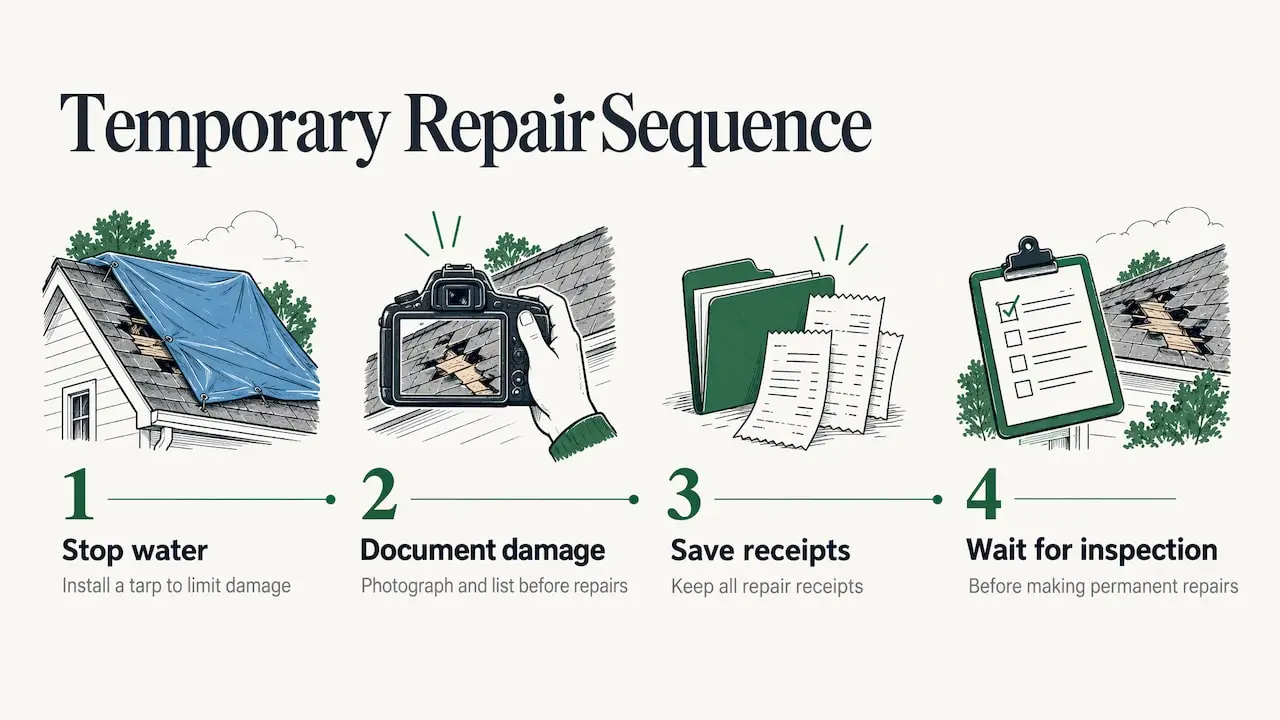
Many homeowners worry that fixing anything will hurt the claim. It will not, when it is done right. FEMA’s guidance says you may mitigate further damage, such as tarping, but you cannot make permanent repairs before the adjuster’s visit. Its cleanup fact sheet adds that you should install a blue tarp as quickly as possible if needed and save all repair receipts. The North Carolina Department of Insurance gives the same sequence: photograph and list damage before temporary repairs and do not make permanent ones until the insurer has inspected.
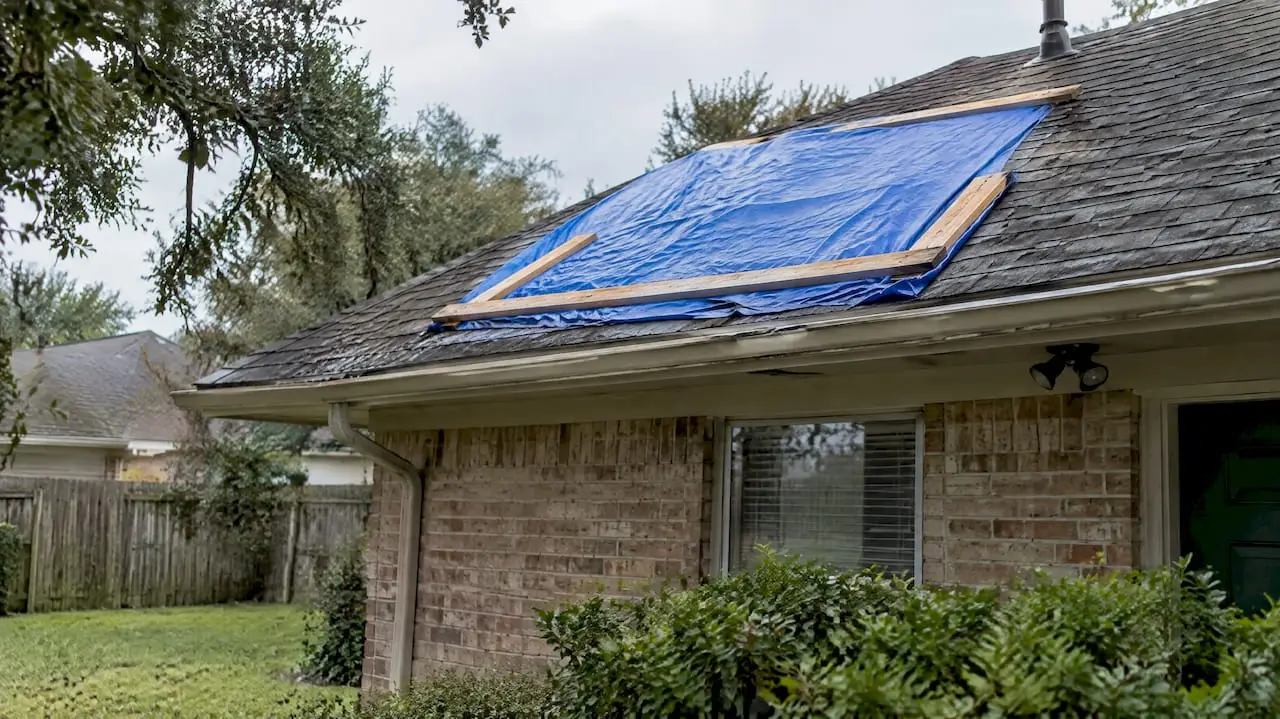
Those are federal and North Carolina sources, so confirm the details in your own Louisiana policy. The principle holds: stop the water, document it, keep receipts, wait on permanent work. Our guides on when to use an emergency roof tarp and fixing a roof temporarily cover the practical side.
Inspection vs. Insurance Decision: Who Decides What
An inspection is a factual record of the roof’s condition. A coverage decision is the insurer’s. For example, Texas’s windstorm insurer explains that its field adjuster documents the loss but does not have final authority to determine what is covered, and that the carrier reviews the report, applies the deductible and depreciation, and sends a letter explaining its decision. Your carrier’s process will differ, but the structure is typical: a report goes in, a decision comes out.
Two practical points:
- Be there when the adjuster visits. The North Carolina Department of Insurance advises homeowners to ask for evidence that the adjuster is licensed and to be present for the inspection.
- Give your roofer’s findings to your insurer. Our photo documentation and honest assessment give you something concrete to put alongside the adjuster’s report. Our roof insurance claims guide for Louisiana storm damage explains the process step by step.
Repair or Replace: What the Inspection Tells You
Most storm damage is repairable: replaced shingles, resealed flashing, new vent boots. Replacement becomes the answer when damage is widespread, when the decking is wet or soft, or when an older roof has little life left. You may have heard of a “25% rule” that forces a full replacement once a quarter of the roof is damaged. It comes from the Florida Building Code and is not a nationwide requirement. Permit thresholds vary by place, so a rule of thumb from another state does not tell you what applies in your parish. Your local building department and your inspection report answer that for your address.
We lay out how we think about the decision in roof repair vs. replacement in Baton Rouge, and if replacement is needed, our roof replacement timeline shows how long the work takes.
Inspecting After Storms Across the Baton Rouge Area
We serve Baton Rouge and the nearby communities, including Prairieville, Gonzales, Denham Springs, Zachary, Hammond, Covington and New Orleans. Conditions vary across the area: heavily wooded neighborhoods see more tree strikes and limb damage, while open areas take the full force of straight-line winds. Our local pages on storm damage restoration in Gonzales and roof inspection in Prairieville cover what we see in those areas.
Book a Free Storm Damage Roof Inspection
If your roof took a hit, or you are not sure, our team will inspect it, explain what we find in plain language and tell you what, if anything, needs to be done. Free inspections are part of how we work, and our repair and replacement work carries a five-year workmanship warranty. We have more than 25 years of roofing experience in Louisiana.

Schedule through our roof inspections page. If water is coming in now, go to emergency roof repairs.
Our Perspective
A storm roof inspection should leave you with answers, not a sales pitch. Over 25 years in Louisiana, we have learned that the first question is always the same: is my house protected right now? So we start there, with an honest look at what the storm did and what has to happen before the next rain.
We believe in clear communication and pressure-free service. You should see the photos, understand the findings and know the options before anyone talks about a contract. Louisiana weather is hard on roofing, which is why our repairs and replacements are built around it, and why we stand behind them with a five-year workmanship warranty.
Our advice is simple: document first, protect the home, get the roof professionally inspected, and keep your insurer informed. We are happy to do the inspection and walk you through it.
John
FAQ
How soon should I get a roof inspection after a storm?
As soon as conditions are safe, ideally before the next rain. Leaks can start small and spread into the decking and insulation. Call your insurer promptly too. After a declared disaster or emergency, Louisiana law gives at least 180 days to submit proof of loss, though your policy may require earlier notice of the claim.
Can I inspect the roof myself?
You can check the attic and walk around the house looking at the roof from the ground. Leave the climbing to a professional. Hairline cracks and granule loss are hard to see from the ground, and a wet roof is dangerous.
Does a roof inspection mean my insurance will pay?
No. The inspection documents the roof’s condition. Your insurance company reviews the report and decides what is covered, applying your deductible and policy terms. Good photos and a clear written assessment help your claim.
Do I need a different inspection for wind damage and hail damage?
The inspection is the same, but the signs differ. Wind tends to lift, crease or remove shingles and bend flashing, often on one side of the house. Hail leaves round bruises and granule loss across the slopes facing the storm. We check for both.
Can I tarp my roof before the adjuster arrives?
Yes. Temporary protection to stop further damage is expected, but save your receipts and photograph the damage first. Hold permanent repairs until your insurer has inspected.
Sources
- BBB Tip: What to do after a damaging storm
- GAF: Storm Damage Roof Repairs Resources Guide
- NIRC: Storm Damage Inspection
- FEMA: Flood insurance guidance
- FEMA: Don’t Wait to Clean Up or Make Repairs
- North Carolina Department of Insurance: Claims and Adjuster Information
- TWIA: How TWIA Estimates Repair Costs
- What is the 25% rule in roofing?
- Louisiana Department of Insurance: Extended Deadlines to File Proof of Loss for Hurricane Claims