If you see missing shingles, lifted tabs, or exposed nail heads after a storm, your roof likely has wind damage, and the first priority is safety, not repair. Stay off the roof if conditions feel unstable, photograph everything from the ground, and arrange a professional inspection soon, since a close-up check often reveals problems ground views miss.
- Wind damage often clusters at roof edges, ridges, hips, corners, and the slope facing the storm; creased neighboring shingles can signal hidden seal failure.
- Asphalt roofs older than 8 to 10 years face greater wind failure risk; warranties typically cover material defects, not wind performance or installation errors.
- Check applicable wind deductibles, often 1% to 5% of insured value, and whether coverage pays replacement cost or subtracts roof depreciation.
- A contractor estimate may speed an insurance claim, but consistency with photos and notes matters more than whether the contractor or adjuster visits first.
- Inspect in spring and fall and after major storms; correctly placed fasteners, continuous seals, and secured flashing reduce wind entry points.
Table of Contents
- What to look for: a practical, location-based damage checklist
- How severe is it? Repair vs. replacement and hidden damage to watch for
- Insurance claims: document, check your policy, and work with adjusters
- Immediate safety steps and temporary fixes while you wait
- Prevention and maintenance to reduce future wind damage
- What a professional inspection finds that a ground check misses
- Our view: the single simplest right move after a wind event
- How we help: inspections, emergency tarping, and repairs
- FAQ
- Sources
What to look for: a practical, location-based damage checklist
Wind damage to roof shingles rarely announces itself with one obvious sign. It shows up as a pattern, and knowing where to look matters as much as knowing what to look for.
Start at ground level, where you can safely spot several warning signs without climbing anything:
- Shingle fragments or whole shingles scattered across the lawn or driveway
- Granules collecting in gutters or at downspout outlets
- Bent, lifted, or detached flashing visible from below
- Water stains or dampness on interior ceilings, especially near exterior walls
If you can safely view the roof from a ladder or a neighboring vantage point, look for lifted or unsealed shingle tabs, horizontal creases across the shingle surface, exposed nail heads, torn shingle mats, and missing shingles entirely. Displaced ridge or hip shingles are also common after high wind.
Damage concentrates in predictable spots: rakes and eaves, ridges, hips, corners, and whichever slope faced the wind directly. These areas take the brunt of uplift forces, so a careful look here often tells you more than scanning the whole roof.
Wind speed context helps explain why. Weather Service event reports show that gusts in the 58 to 90-plus mph range, the kind produced by derechos and severe thunderstorms, routinely cause shingle loss and large-scale roof damage. Even gusts below that range can lift poorly sealed shingles, which is why installation quality matters as much as storm intensity.
How severe is it? Repair vs. replacement and hidden damage to watch for
Counting missing shingles only tells part of the story. The shingles still in place next to a damaged area may have broken seal lines or creases that will not show visible movement yet but will fail in the next wind event.
A few checks matter more than a simple shingle count:
- Press gently on neighboring shingles to check whether the adhesive seal has already broken
- Look for creasing across multiple shingles in a line, which signals uplift stress even without full detachment
- Note whether damage clusters in one area or spreads across several planes, since scattered failures often mean a systemic installation issue
Roof age plays a direct role in what happens next. Insurance guidance from Triple-I notes that asphalt roofs older than 8 to 10 years become more vulnerable to wind failure and that manufacturer warranties typically cover material defects, not wind performance or installation errors.
Hidden issues a ground check cannot catch include adhesive bond failure between shingle layers, fasteners placed too high or too low on the shingle, and underlayment or decking damage beneath the surface. If you see creasing across several shingles, exposed decking, or any sign of water intrusion in the attic, those are red flags that justify a professional close-up assessment rather than a DIY patch.
Insurance claims: document, check your policy, and work with adjusters
Insurers expect specific documentation before they process a wind damage claim, and gathering it early protects your options.
- Take time-stamped photos and video of every damaged area, from the ground and, where safe, from a ladder
- Photograph interior damage separately, including any ceiling stains or active leaks
- Keep a written list of all damaged areas, matched to your photos
- Save receipts for any emergency repairs, such as tarping, since these costs are often reimbursable
- Review your policy for a separate wind or hurricane deductible, which commonly ranges from 1% to 5% of your home’s insured value where it applies
- Confirm whether your policy pays replacement cost or actual cash value, since actual cash value subtracts depreciation based on your roof’s age
Getting a contractor estimate before you call your insurer can speed up the claim, since many insurers ask for one anyway, though some homeowners prefer to let the adjuster inspect first to avoid conflicting figures. Either approach works, but consistency between your documentation and your contractor’s estimate matters more than which step comes first. When the adjuster visits, walk the roof with them if possible, point out every area from your list, and avoid signing a settlement before confirming it reflects the full scope of damage.
Immediate safety steps and temporary fixes while you wait
Your safety comes before your roof. Stay off the roof if there are downed power lines nearby, loose debris, or any sign of structural instability, and wait for daylight and calm conditions before attempting even a ground-level inspection.
- Move inside to areas away from windows and loose exterior debris until conditions settle
- Place buckets or tarps indoors under any active leak to limit interior damage
- Photograph all visible exterior and interior damage before any temporary repair work begins
- Call for emergency roof repair if the opening is large, if water is actively entering, or if you cannot safely assess the damage yourself
Pro Tip: Photograph wide shots of each damaged roof section plus close-up shots of individual shingles, and keep every receipt from temporary repairs. Adjusters rely on this documentation to verify the timeline and scope of damage.
Prevention and maintenance to reduce future wind damage
A roof that survives the next storm usually owes it to maintenance done long before the wind arrived. Inspect your roof in spring and fall, and always after a major storm, to catch small problems before they grow.
- Trim overhanging tree limbs that could strike the roof during high wind
- Ask your roofer to confirm proper fastener placement and consider ring-shank nails, which FEMA’s post-hurricane findings link to better wind resistance when combined with correct seal continuity
- Choose shingles with a wind rating suited to your region, paired with upgraded underlayment at vulnerable edges
- Secure soffits, vents, and flashing, since loose components give wind an entry point
If your roof is older or sits in an area with frequent high wind exposure, upgrading materials during your next replacement is worth discussing with a roofing professional rather than waiting for storm damage to force the decision.
What a professional inspection finds that a ground check misses
A trained eye checks details that are nearly impossible to judge from the ground or even from a ladder.
- Seal continuity across every shingle course, not just the visibly damaged ones
- Fastener placement and depth, since misplaced nails are a common hidden failure point
- Flashing integration at valleys, chimneys, and vents
- Underlayment condition and any decking exposure beneath lifted shingles
We’ve built our inspection process around these details while working on Louisiana roofs, and every inspection helps identify potential issues, with emergency tarping if needed, all backed by our workmanship warranty.
Our view: the single simplest right move after a wind event
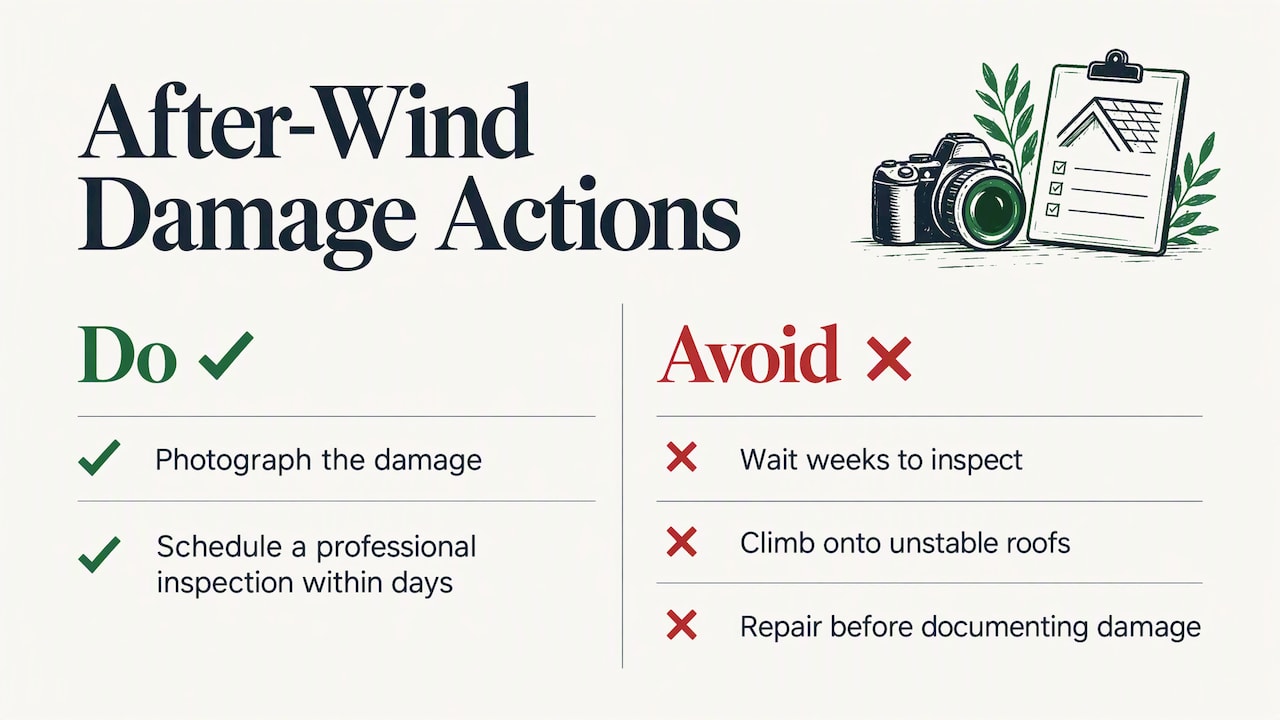
The most common mistake is waiting. Homeowners delay inspections, climb onto unstable roofs to self-diagnose, or make repairs without documenting them first, all of which complicate insurance claims later.
The simplest right move is to photograph the damage and schedule a professional inspection within days, not weeks. Acting quickly preserves your insurance options and keeps small problems from becoming expensive ones.
How we help: inspections, emergency tarping, and repairs
We built our business around the moment you’re in right now: storm damage, an uncertain roof, and a decision that needs to be made correctly the first time. Our roof inspections are thorough and informed by our experience with Louisiana weather, and every repair we complete carries our workmanship warranty.

When you call us after a wind event, here’s what helps us move fast:
- Your photos and notes on where damage appears
- Your insurance policy details, including your deductible type
- Your roof’s approximate age, since that affects your repair or replacement options
Whether you need emergency tarping or a full inspection, reach out and we’ll walk you through next steps with a clear, pressure-free assessment. For readers who want a broader look at coverage before calling an adjuster, our wind damage insurance guidance page covers the documentation details in more depth.
FAQ
What wind speed will damage a roof?
Shingle damage can start well below hurricane strength, since poorly sealed shingles may lift in moderate gusts. Weather Service storm reports document gusts of 58 to 90-plus mph causing significant shingle loss and roof damage in events like derechos.
What is the 25% rule in roofing?
If your area has a specific code provision tied to a roofing threshold, check with your local building department or a licensed roofing professional for the exact requirement.
Does walking on a roof damage the shingles?
Walking on a roof can stress shingles, especially older or already wind-damaged ones, and it also puts you at risk if the surface is unstable after a storm. We recommend avoiding roof access after a wind event and leaving close-up assessment to a professional with proper safety equipment.
What is the life expectancy of a wood shake shingle roof?
Life expectancy depends heavily on material grade, installation quality, and climate exposure, and no source cited here provides a specific figure for wood shake roofs. A roofing professional can assess your specific roof’s condition and remaining service life during an inspection.
Sources
- Best Practices for Minimizing Wind and Water Infiltration Damage
- How Your Roof Influences Your Home and Business Insurance
- Derecho of July 15 into July 16, 2024